

Future West, a new publication on living on less, relocation and financial resilience, publishes family savings estimates built from US government spending data and international price data.
CHIANG MAI, Thailand, November 10, 2026 – A typical young American family could save about USD 14,800 a year without moving, according to a new analysis by Future West. If they move to one of the three lowest-cost expat cities in its 16-city comparison, their everyday living costs could drop by 58% to 68%.
These are illustrative estimates, not guarantees. The relocation figures cover everyday living costs only: housing, food, local transport, utilities, schooling and similar spending. They exclude health insurance, visa fees, a car, flights home and taxes, all of which can change the picture significantly. The family scenario assumes that a US-level income continues abroad through remote work or a portable or online business.
Family savings option one: stay put
Future West started from typical US household budgets based on 2024 US Bureau of Labor Statistics data: USD 105,709 a year for a young family of four and USD 61,432 for a retired couple. It then counted a handful of practical changes, counting any overlapping ideas only once:
- Keeping a reliable used car paid for in cash instead of financing a new luxury model (how the car math works)
- Replacing a second car with a scooter (family) or living with one car (retired couple)
- Switching a quarter of the grocery basket to store brands
- Growing a modest vegetable garden (grow food on a budget)
Estimated yearly savings: about USD 14,830 (14.0%) for the family and USD 13,147 (21.4%) for the retired couple.
Option two: move abroad
Future West compared living costs in 16 expat cities against the US average, using Numbeo price data collected in October 2026. The three lowest-cost cities were all in Southeast Asia:
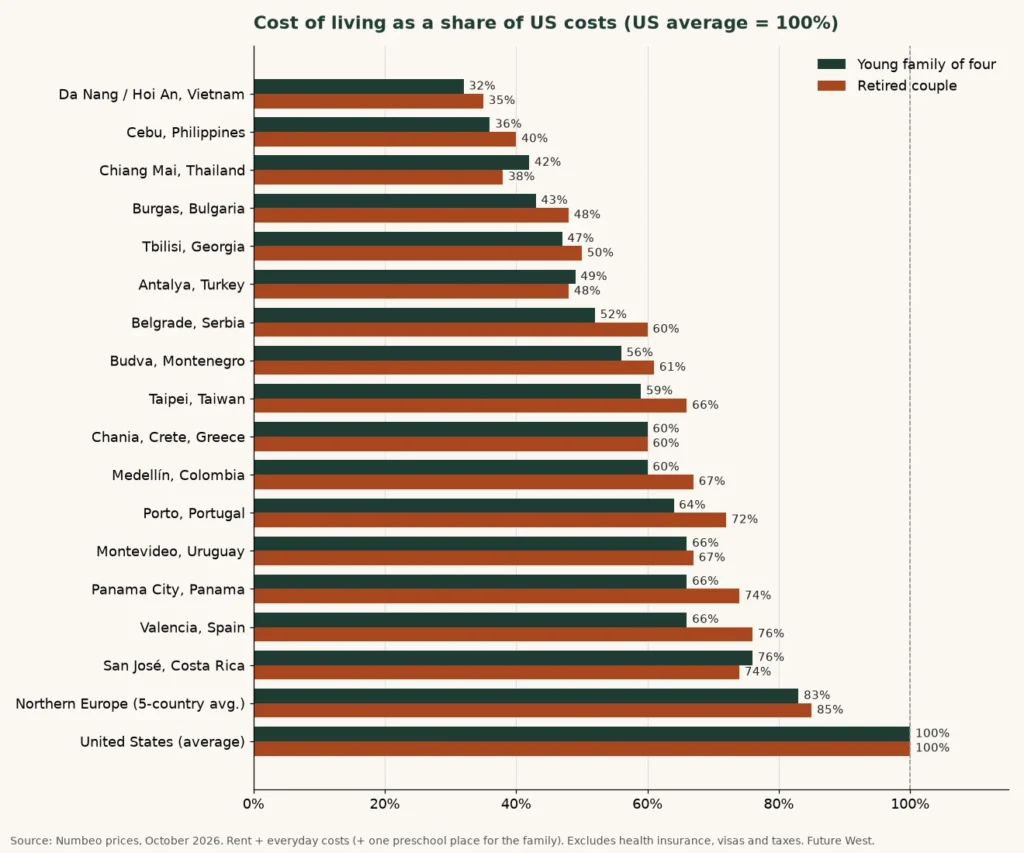
| City | Family of four (% of US cost) | Retired couple (% of US cost) |
|---|---|---|
| Da Nang / Hoi An, Vietnam | 32% | 35% |
| Cebu, Philippines | 36% | 40% |
| Chiang Mai, Thailand | 42% | 38% |
For a family, that means everyday living costs 58% to 68% below the US average. For a retired couple, they fall 60% to 65% below.
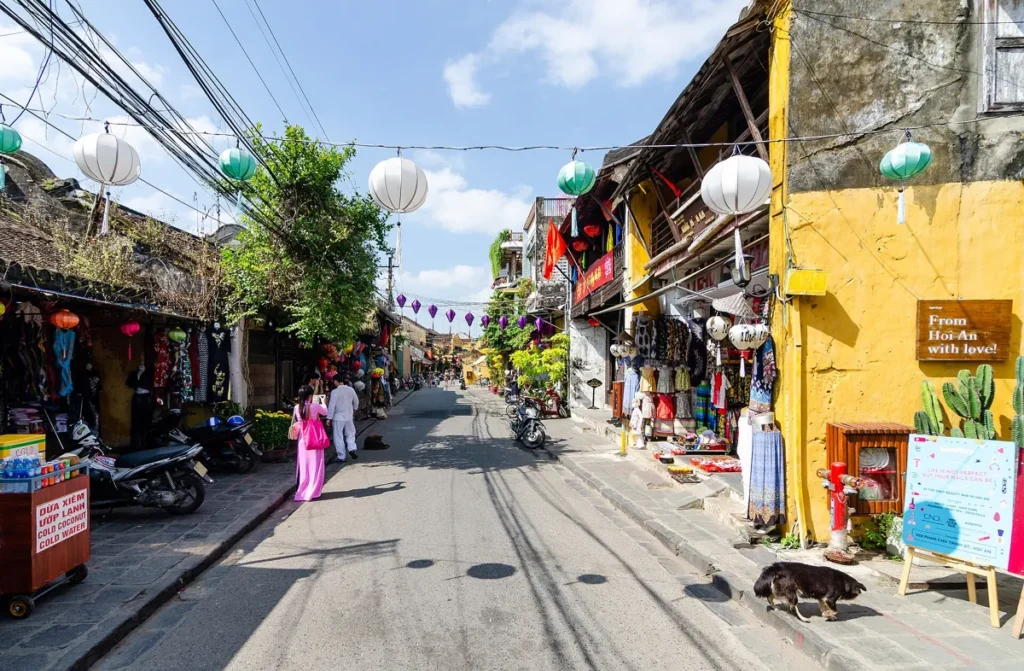

“I am not going back into the box”
Future West editor Cal Westermann draws on his own experience. He lived in the United States for a decade, has done business all over the world, and has since relocated with his family.
“I lived in the US for ten years and came to see how much the system is built around keeping the average consumer spending: in debt, on monthly payments, on ongoing prescriptions, and afraid of the world beyond the border. I’ve done business all over the world and travelled Asia’s major cities many times, so ultimately, Chiang Mai, Thailand has become our base. Once you see how families actually live there, you start questioning everything you were told. Three years after we relocated, my US-born wife put it best: ‘No, I am not going back into the box.'”
Cal Westermann, Editor, Future West
Would you do it?
Future West is not urging every family to move. “For most people, the stay-put savings are the realistic first step,” Westermann said. “But Americans deserve honest numbers on both choices, and then they can decide for themselves.”
The full methodology, sources and assumptions are published in the Future West Savings Tracker and the 16-city cost-of-living comparison.
About Future West
Future West is an independent publication about financial resilience: living on less, relocating within the US or abroad, and building portable income. Its articles provide general information, not financial, tax, legal or medical advice. Future West has no connection to the former Northern Rockies nonprofit organization that previously used the Future West name. More about Future West.
Media contact
Cal Westermann, Editor, Future West
Email: info(at)future-west.org
Contact form
Get new research first: Field Notes, the free weekly Future West email.