Quick answer
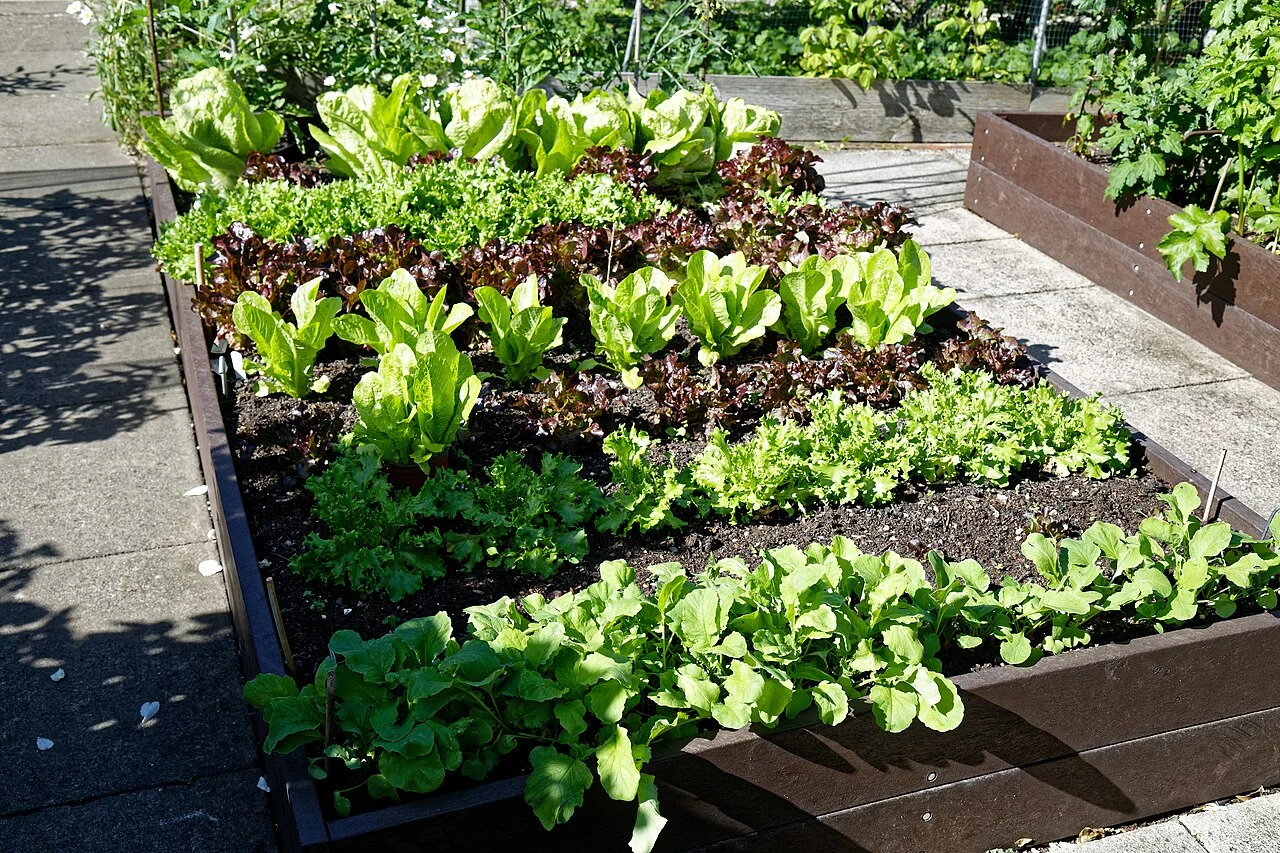
You can grow food on a budget with one raised bed, about 4 by 8 feet (1.2 by 2.4 meters), for roughly USD 60 to 440 in the first year, depending on how much you build from free materials. Put it in full sun, fill it cheaply, mulch it with cardboard or grass clippings, and plant crops that are expensive in the store: herbs, salad greens, cherry tomatoes, zucchini, beans and garlic. Studies show a well-kept garden returns several times what it costs, and the bed, tools and soil keep paying in year two.
Disclaimer: results vary with climate, soil, water prices and skill. Check local rules (landlord, homeowners association) before building beds or keeping chickens, and test the soil for lead before growing food in older urban yards. This is general information, not professional gardening, financial or legal advice.
Does growing your own food really save money?
Mostly yes, if you count materials and not your time. The best-known estimate comes from the National Gardening Association: an average 600-square-foot (56 m²) garden produced about 300 pounds (136 kg) of food worth around USD 600, on about USD 70 of spending, a return of more than 8 times the cost (National Gardening Association).
More careful studies are less rosy but still positive. An Oregon State University study found that even in the first year, with setup costs, a home garden returned a net USD 0.74 per square foot, about USD 8 per m² (University of Missouri). Kansas State University reviewed several studies: gardens yielded USD 180 to 1,300 above their material costs in a season, but if the gardener’s time is valued at a wage, the result ranges from a small loss to about USD 550 (Kansas State University).
Three conclusions for a budget gardener:
- Crop choice matters most. Grow what is expensive to buy and cheap to grow.
- Keep setup costs low. Free materials turn a break-even first year into a clear win.
- Year two is cheaper than year one. The bed, tools and much of the soil carry over, so the return climbs.
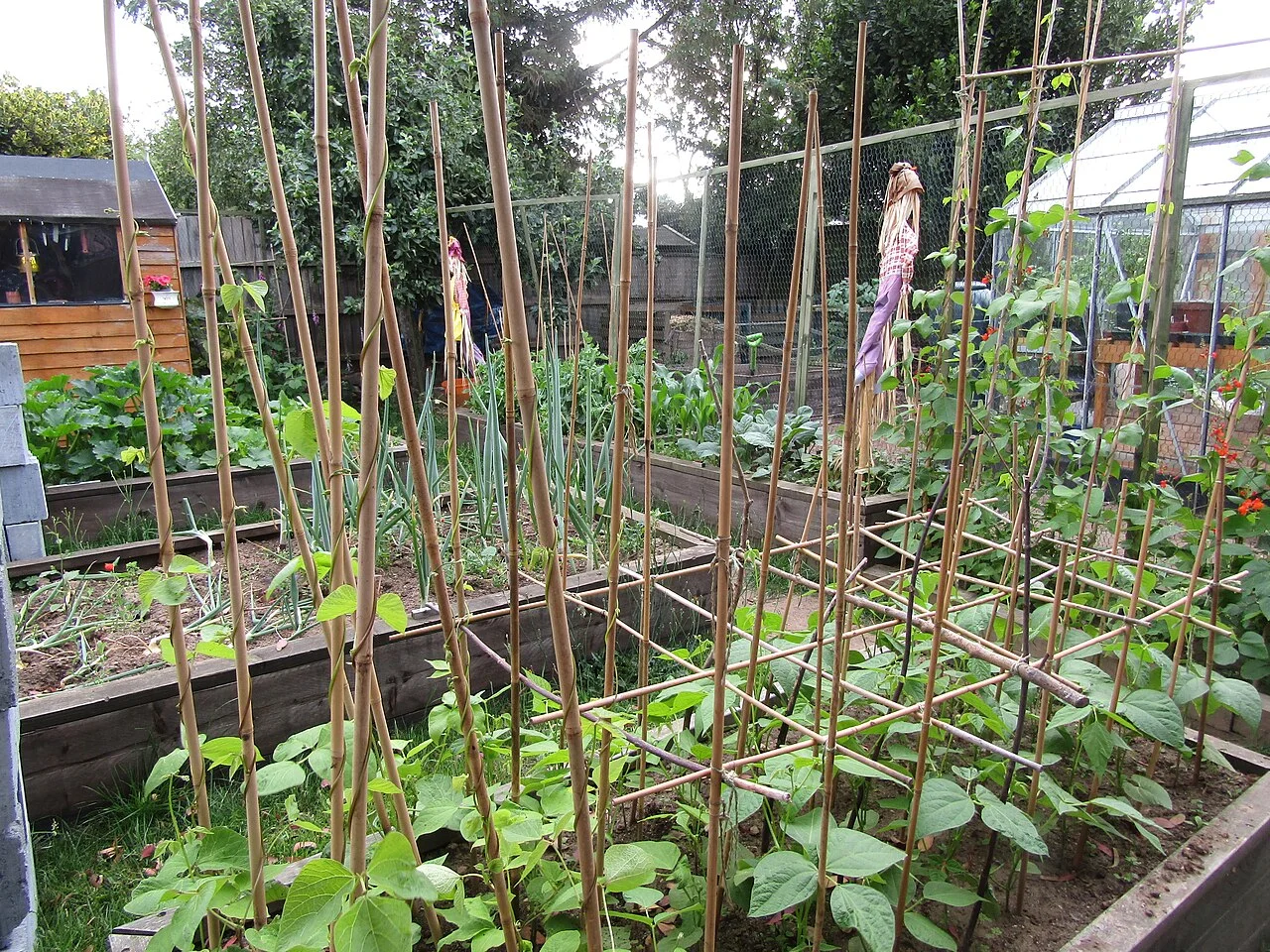
Year-one budget for one raised bed
For one 4 by 8 foot (1.2 by 2.4 m) bed, about 32 square feet (3 m²). Ranges show the free or low-cost route against buying new, at typical US prices in late 2026.
| Item | Low-cost route | Approx. cost | How-to on Sustainably Offgrid |
|---|---|---|---|
| Bed frame | Stones, logs, untreated pallet wood, or a simple lumber frame | USD 0–100 | |
| Filling the bed | Layer free organic material, then top with compost and soil | USD 0–150 | 12 cheap ways to fill a raised bed, DIY raised bed soil |
| Seeds and a few seedlings | Seed packets; buy only tomato and pepper starts | USD 20–40 | |
| Mulch | Cardboard, newspaper, grass clippings, leaves | USD 0 | cardboard mulch, newspaper mulch |
| Basic tools | Spade, hand trowel, watering can or hose | USD 30–60 | |
| Water | Rain barrel or tap water | USD 10–90 | collecting rainwater |
| Total | USD 60–440 |
A bed this size can produce roughly 16 to 48 pounds (7 to 22 kg) in a season, depending on crops and care; well-run intensive beds reach the top of that range. Most people spend USD 150 to 300 the first time. Start with one bed and add a second once the first one works.
What to grow first: crops that pay
Grow food on a budget by choosing crops that cost a lot per kilogram in the store, produce for weeks, and fit a small bed:
| Crop | Why it pays | Tip |
|---|---|---|
| Herbs (basil, parsley, chives) | Very expensive per kilogram in stores | Pick often; one plant lasts all season |
| Salad greens, cut-and-come-again | Regrow after every cut | Sow a short row every 2 to 3 weeks |
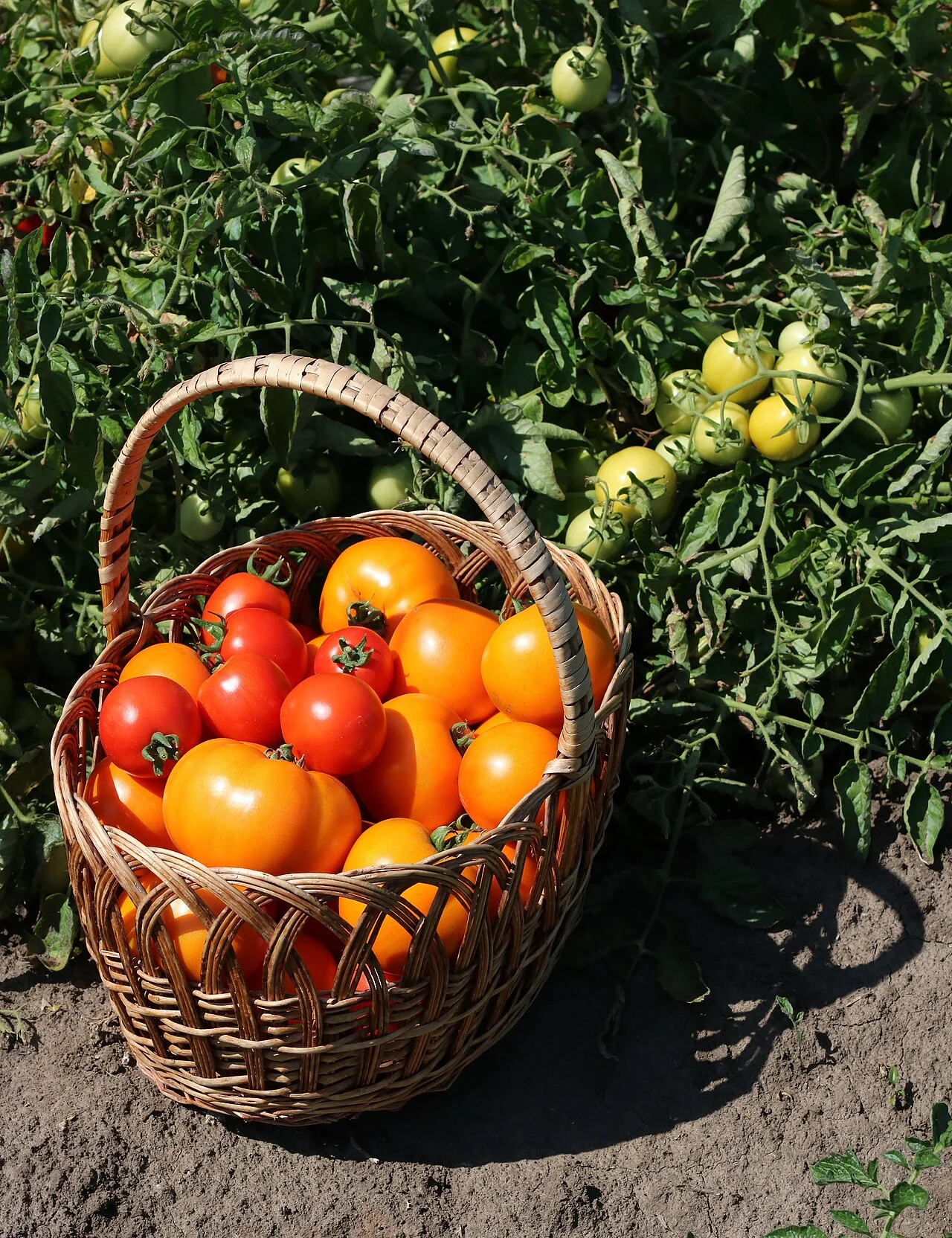
| Cherry tomatoes | High yield, pricey in stores | Stake or cage them; mulch well |
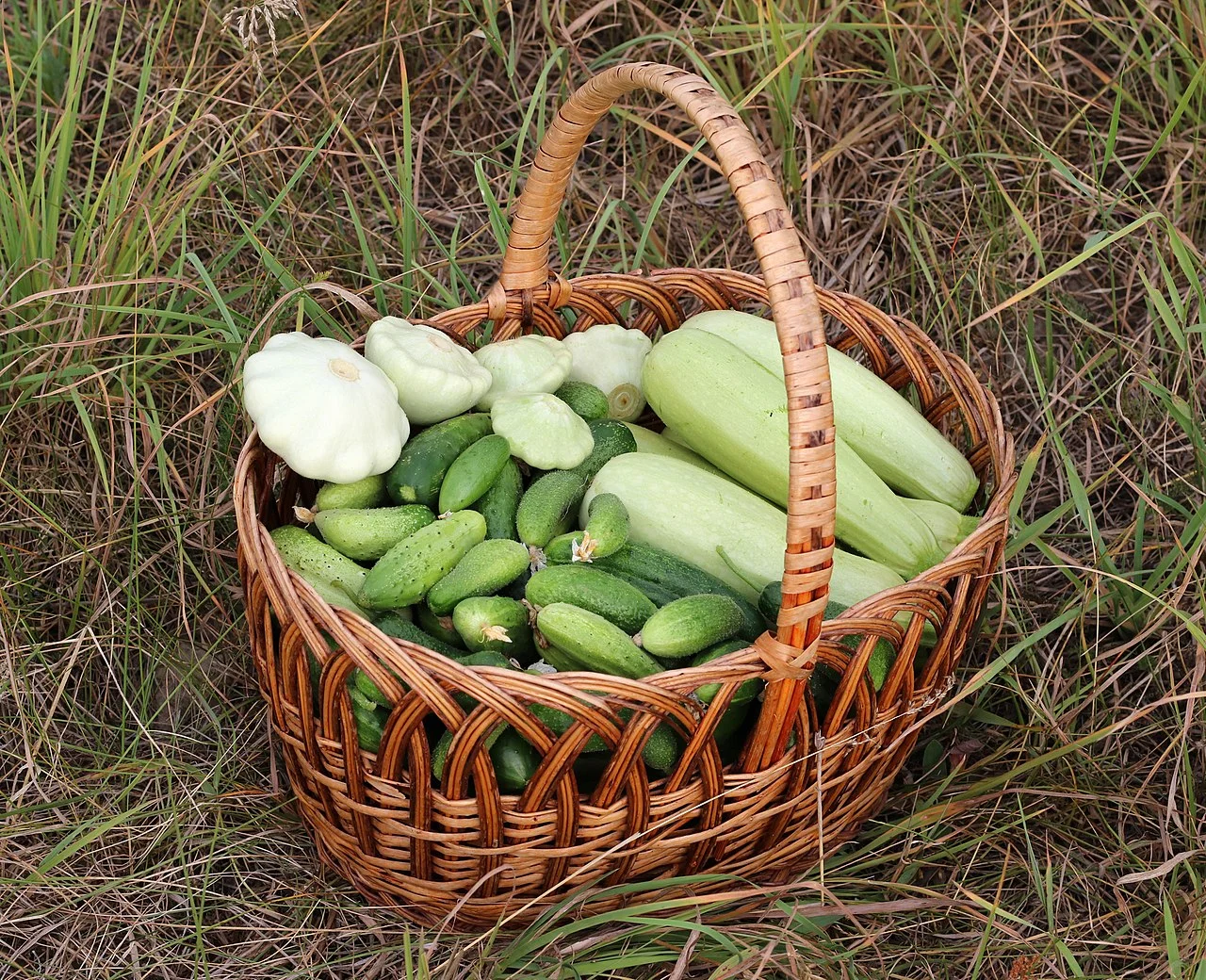
| Zucchini | One or two plants feed a family | Pick small and often |
| Pole beans | Climb, so they use little ground | Grow on a trellis or stakes |
| Kale and Swiss chard | Harvest leaves for months, into winter | Pick outer leaves only |
| Garlic | Planted in fall, stores for months | See planting garlic in the fall |
Savings or security? Potatoes, onions, carrots and cabbage are cheap in the store, so they save little money per square foot. But they give the most calories and keep for months, which matters more if food gets scarce. Grow high-value crops to save money now, and add a patch of potatoes and winter keepers for security.
The first-year plan, season by season
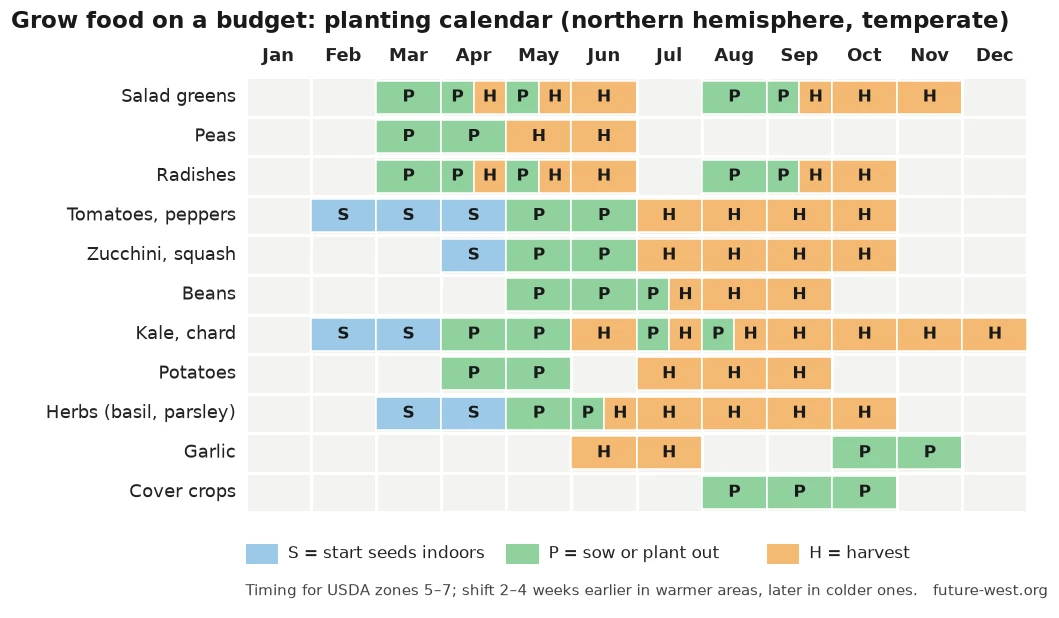
Planting calendar: January to December
This matrix shows when to start seeds indoors (S), sow or plant out (P) and harvest (H) for typical temperate areas of the northern hemisphere, roughly USDA zones 5 to 7, which covers much of the US, Central Europe and the UK. Use your local last-frost date: shift everything 2 to 4 weeks earlier in warmer areas and later in colder ones. Scroll sideways on a phone.
| Crop | Jan | Feb | Mar | Apr | May | Jun | Jul | Aug | Sep | Oct | Nov | Dec |
|---|---|---|---|---|---|---|---|---|---|---|---|---|
| Salad greens | P | P H | P H | H | P | P H | H | H | ||||
| Peas | P | P | H | H | ||||||||
| Radishes | P | P H | P H | H | P | P H | H | |||||
| Tomatoes, peppers | S | S | S | P | P | H | H | H | H | |||
| Zucchini, squash | S | P | P | H | H | H | H | |||||
| Beans | P | P | P H | H | H | |||||||
| Kale, chard | S | S | P | P | H | P H | P H | H | H | H | H | |
| Potatoes | P | P | H | H | H | |||||||
| Herbs (basil, parsley) | S | S | P | P H | H | H | H | H | ||||
| Garlic | H | H | P | P | ||||||||
| Cover crops | P | P | P |
Garlic planted in October is harvested the following June or July. Cover crops sown in late summer are cut or dug in the next spring, a few weeks before planting.
Late winter: plan and collect
- Pick the sunniest spot: at least 6 hours of direct sun.
- Collect free materials: cardboard, leaves, untreated wood, neighbors’ grass clippings.
- Choose 5 to 7 crops from the list above and buy seeds.
Spring: build, fill and sow
- Build the frame and fill it cheaply; see 12 cheap ways to fill a raised bed.
- Sow salad greens, peas and radishes as soon as the soil can be worked.
- Mulch bare soil to save water and weeding; the benefits of mulching add up fast.
Summer: plant warm crops, water and protect
- Plant tomatoes, zucchini, beans and basil after the last frost.
- Water deeply but less often; mulch with grass clippings.
- Handle pests cheaply: learn what attracts slugs and try a homemade caffeine spray.
Fall: harvest, plant garlic, feed the soil
- Harvest and store or preserve the surplus; see our 30-day emergency pantry for storage basics.
- Plant garlic and the best crops for fall and winter.
- Sow cover crops in empty beds to feed next year’s soil for free.
Winter: rest, top up and plan year two
- Top up or refresh tired soil; see four ways to replace raised bed soil.
- Note what grew well and what you actually ate; grow more of that.
- Save seed from open-pollinated plants to cut next year’s seed bill.
Year two and beyond: plant once, harvest for years
Once the annual bed works, add perennials. They cost more up front but produce for a decade or longer with little work:
- Fruit and nut trees: see the best trees to grow on a homestead.
- Grapes and berries: grape growing in 5 steps.
- Chickens: eggs and free fertilizer, but feed, housing and winter care cost money; see keeping chickens warm in winter before you start.
A garden also gives you seeds and skills that hold their value in hard times; see the seed list in our emergency items that hold their value and the diesel shortage scenario.
Frequently asked questions
How much does it cost to start a vegetable garden on a budget?
One 4 by 8 foot (1.2 by 2.4 m) raised bed costs roughly USD 60 to 440 in the first year, depending on how much you build from free materials. Most people spend USD 150 to 300.
Does growing your own food really save money?
Usually, if you count materials and not your time. The National Gardening Association estimated about USD 600 of food from USD 70 of spending in an average garden, more than 8 times the cost. Valuing your labor shrinks the gain.
What vegetables save the most money?
Herbs, cut-and-come-again salad greens, cherry tomatoes, zucchini, pole beans, kale, chard and garlic. They are expensive in stores and productive in a small space.
Are potatoes worth growing?
Not for saving money, since they are cheap to buy. They are worth growing for food security: they give many calories per square foot and store for months.
How do I fill a raised bed cheaply?
Layer free organic material such as logs, branches, leaves, grass clippings and cardboard at the bottom, and add purchased compost and soil only for the top layer.
When will a garden pay for itself?
With low setup costs and high-value crops, often in the first season. Otherwise usually in year two, when the bed, tools and most of the soil carry over.
Important: savings figures come from US studies and vary widely with climate, crops and water costs. This article is not professional gardening, financial or legal advice.
Featured photo: Acabashi, Wikimedia Commons (CC BY-SA 4.0).