Quick answer
An emergency pantry for 30 days costs roughly USD 90 to 160 per adult if you build it from ordinary supermarket staples: white rice, dried beans and lentils, oats, pasta, flour, oil, peanut butter, sugar or honey, canned meat, fish and vegetables, powdered milk, salt and spices. Buy a little every week for 8 weeks, store it cool, dry and dark, and eat the oldest items first so nothing goes to waste. You don’t need expensive survival buckets.
Disclaimer: this article is general information, not medical, nutritional or food-safety advice. People with allergies, diabetes, kidney disease, pregnancy or special diets should check with a doctor or dietitian. Follow the food-safety rules on each package.
Why a 30-day emergency pantry
Supermarkets carry only a few days of stock. When a storm, a power cut, a strike or a fuel shortage disrupts deliveries, fresh milk, eggs and bread are the first things to go. A month of food at home means you skip the panic buying, keep eating normally and can help a neighbor. A 30-day supply is also small enough to fit in a closet, cheap enough to build in two months and easy to rotate.
Plan on about 2,000 calories per adult per day, or 60,000 for the month. Rice, beans, flour, oil and sugar give the most calories per dollar; cans, oats and peanut butter add protein, fat and variety.
The emergency pantry shopping list
Quantities are for one adult for 30 days, about 2,000 to 2,300 calories a day. Prices are typical US supermarket ranges for late 2026; they vary by country, store and brand.
| Food | Amount for 30 days | Approximate cost | Why it is on the list |
|---|---|---|---|
| White rice | 10 lb (4.5 kg) | USD 8–12 | Cheapest calories; stores for decades if sealed |
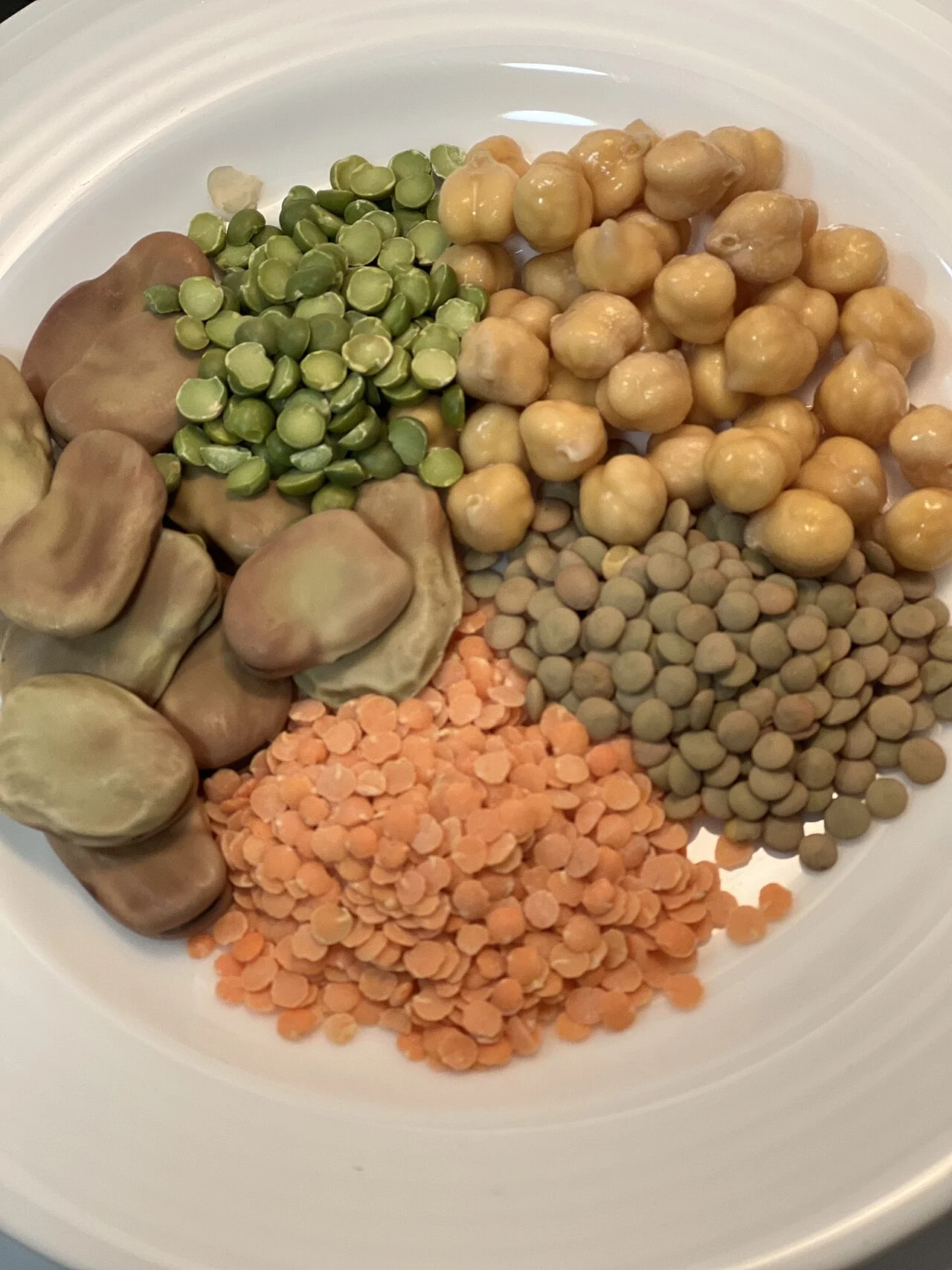
| Dried beans, lentils, split peas | 6 lb (2.7 kg) | USD 7–12 | Protein and fiber; lentils cook in about 20 minutes |
| Rolled oats | 3 lb (1.4 kg) | USD 4–6 | Breakfast with just hot water |
| Dried pasta | 4 lb (1.8 kg) | USD 4–7 | Familiar, quick, cheap |
| Flour, baking powder, yeast | 5 lb (2.3 kg) flour | USD 5–8 | Flatbread, pancakes, biscuits, bread |
| Vegetable oil or ghee | 1 quart (0.95 L) | USD 4–7 | Dense calories; cooking fat |
| Peanut butter | 2 jars, 16 oz (450 g) each | USD 5–8 | Protein and fat, no cooking |
| Sugar or honey | 2 lb (0.9 kg) | USD 3–8 | Quick energy; honey keeps for years |
| Canned meat and fish (tuna, chicken, beef, Spam) | 10 cans | USD 15–30 | Protein without a fridge |
| Canned vegetables and fruit | 15 cans | USD 12–22 | Vitamins, fiber, variety |
| Powdered milk | 1 lb (450 g) | USD 6–10 | Milk for oats, baking, drinking |
| Salt, spices, bouillon cubes, vinegar | A few jars | USD 6–10 | Flavor keeps people eating |
| Coffee, tea, drink mixes | A few jars or boxes | USD 5–10 | Comfort and morale |
| Multivitamin | 1 bottle | USD 5–10 | Fills gaps in a shelf-stable diet |
| Total | USD 90–160 | About 60,000 to 68,000 calories |
For a family of four, multiply by four and adjust for children. Swap items freely for foods your household already eats.
Build it in 8 weeks for USD 11 to 20 a week
You don’t have to buy everything at once. Add a few items to every grocery trip:
- Weeks 1 and 2: rice, beans, lentils and salt. The calorie base.
- Weeks 3 and 4: canned meat and fish, oil, peanut butter.
- Weeks 5 and 6: oats, pasta, flour, baking powder, yeast, sugar or honey.
- Weeks 7 and 8: canned vegetables and fruit, powdered milk, spices, bouillon, coffee and tea, vitamins.
Watch for sales and buy store brands; plain staples are almost identical to brand names. Warehouse stores sell 20 to 50 lb (9 to 23 kg) bags of rice and beans for even less, which suits a family or a longer horizon.
Canned meals and proteins that people actually eat
A pantry only helps if the food gets eaten. Under stress, people eat less of food they dislike, so stock a mix of plain proteins you can add to rice and pasta, and complete meals you can eat cold, straight from the can, when there is no power or no energy to cook. Prices are typical US supermarket ranges for late 2026.
| Can | Type | Eat cold? | Approx. price per can | Tip |
|---|---|---|---|---|
| Canned tuna, 5 oz (142 g) | Protein | Yes | USD 1–2 | Mix with pasta, rice or crackers |
| Canned chicken breast, 12.5 oz (354 g) | Protein | Yes | USD 3–5 | Stir into rice, soups or tortillas |
| Sardines, 3.75 oz (106 g) | Protein | Yes | USD 1.50–3 | Rich in fat and omega-3; eat on crackers |
| Spam, Classic or Light, 12 oz (340 g) | Protein | Yes | USD 3–5 | Pan-fry slices if you have heat |
| Baked beans, 16 oz (454 g) | Side or meal | Yes | USD 1–2.50 | Protein and calories in one can |
| Refried beans, 16 oz (454 g) | Side | Yes | USD 1–2 | Spread on tortillas or flatbread |
| Hormel Chili, with or without beans, 15 oz (425 g) | Complete meal | Yes | USD 2–3.50 | One can feeds two over rice or pasta |
| Dinty Moore Beef Stew, 20 oz (567 g) | Complete meal | Yes | USD 3–4.50 | Better warmed, fine cold |
| Campbell’s Chunky soups, about 18.8 oz (533 g) | Complete meal | Yes | USD 2–3.50 | Thick enough to be a meal |
| Chef Boyardee Beef Ravioli, 15 oz (425 g) | Complete meal | Yes | USD 1.50–2.50 | Children usually like it |
Meat, fish, bean and stew cans are low-acid foods that keep 2 to 5 years in a cool, dry place (USDA). Skip canned pasta in cream sauces, low-sodium stews and cheap no-name canned meals. Whatever you choose, buy one can first and taste it before stocking up. Brands are examples only; Future West has no business relationship with them.
How long pantry food lasts
| Food | How long it keeps | Condition |
|---|---|---|
| White rice | 25–30 years | Sealed, oxygen-free and cool; about 10 years at a steady 70°F (21°C) (Utah State University Extension) |
| White rice, after opening | 1–2 years | Airtight container (USU Extension) |
| Low-acid cans: meat, fish, soups, stews, beans, corn, peas | 2–5 years | Cool, dry place, can in good condition (USDA) |
| High-acid cans: fruit, tomatoes, juice, pickles | 12–18 months | Cool, dry place (USDA) |
| Dried beans, lentils, pasta, oats | Several years in sealed containers | Cool, dry, dark; beans get harder and slower to cook with age |
| Salt, sugar, honey | Indefinitely | Kept dry; honey may crystallize, which is not spoilage |
| Cooking oil, peanut butter, whole-grain flour | Shortest shelf life | Fats go rancid in heat; rotate them first |
Brown rice and whole-wheat flour contain natural oils that turn rancid within months, so store white rice and white flour for the long term and keep whole grains in the regular kitchen cycle.
How to store your pantry food
- Cool, dry and dark: a closet, cool basement or space under a bed. Avoid the garage, the attic and the cupboard above the stove or fridge.
- Off the floor and away from walls: a cheap shelf keeps damp and pests out.
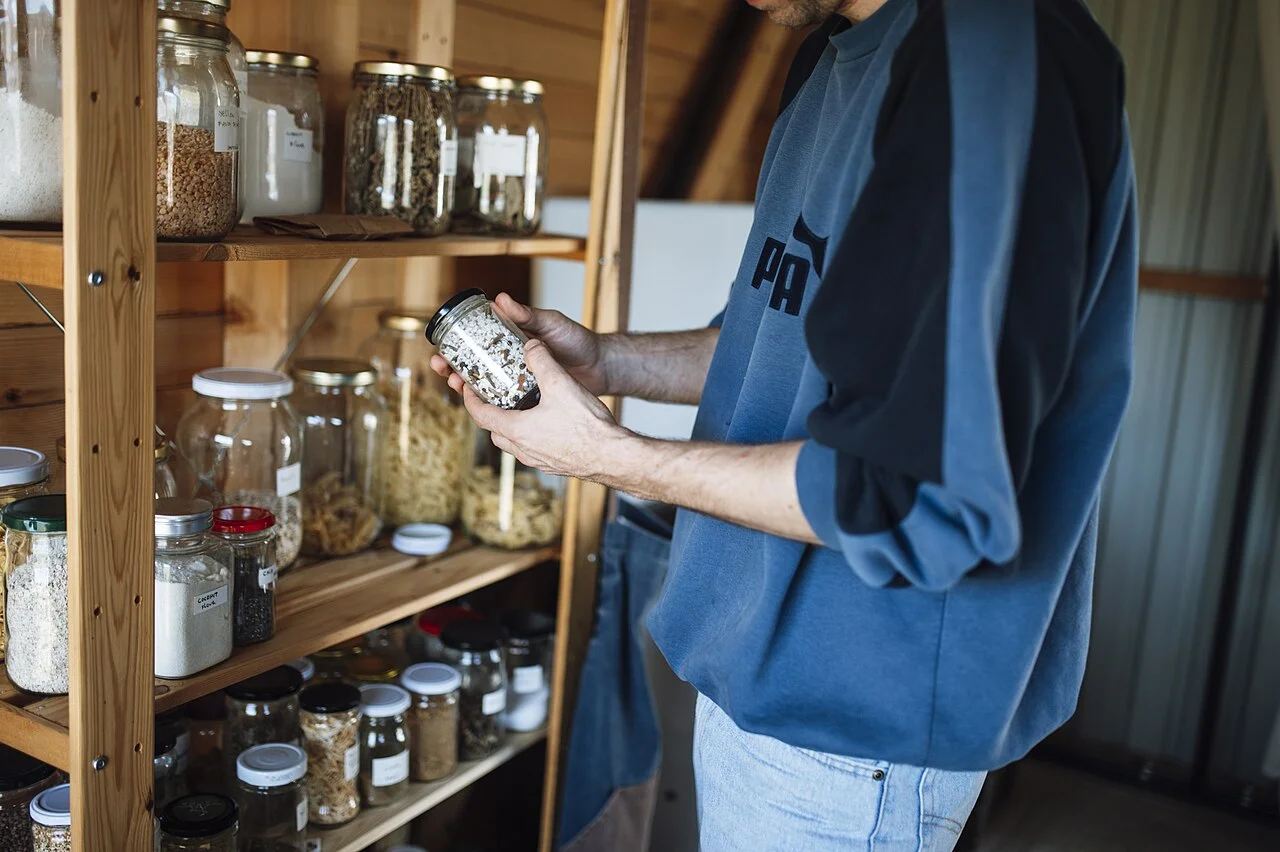
- Airtight containers: glass jars, food-safe PET plastic bottles and containers, or Mylar bags work best (USU Extension). Washed and fully dried soda bottles are free storage for rice, beans and sugar.
- For long-term storage: seal rice and beans in Mylar bags with oxygen absorbers, then put the bags in a food-grade bucket with a tight lid to keep out rodents.
- Kill insects first: freeze small bags of rice or flour for 3 days before storing them, then let them return to room temperature before sealing (USU Extension).
- Label everything with the contents and the purchase date.

Rotation: store what you eat, eat what you store
Rotation is what turns a stockpile into a working pantry. Put new purchases at the back and take from the front: first in, first out. Cook from the pantry once or twice a week, then replace what you used on your next shopping trip. That way nothing expires and you learn how to cook these foods before you need to.
Once a quarter, check for dented, bulging, rusted or leaking cans and throw them out unopened. These are warning signs of botulism, which can be deadly even in tiny amounts; never taste food from a damaged can (USDA Food Safety and Inspection Service).
What not to buy
- Only rice and beans: they keep you alive but not well. Add fat, protein, vegetables and flavor.
- Chips, candy and soda as the base: empty calories give short bursts of energy followed by crashes.
- Overpriced survival kits and gourmet freeze-dried buckets: they cost many times more per calorie than supermarket staples and often sit unused until they expire. A few freeze-dried meals are fine for a go-bag.
- Foods nobody in the house likes: they will still be on the shelf when they expire.
- More fresh or frozen food than you can eat in a power cut: a freezer full of meat is a loss without electricity.
Water and cooking without power
Food is only half the plan. Store at least 1 gallon (3.8 liters) of water per person per day, for drinking and hygiene (Ready.gov). If you have a roof and space, collecting rainwater and a portable water filter extend that supply. Then plan how you will cook if the power goes out:
- a camping stove with spare fuel canisters, used outdoors or with good ventilation, never a grill indoors;
- foods that need little cooking: lentils, oats, pasta, instant potatoes and ramen;
- ready-to-eat items: canned meals, peanut butter, crackers, canned fruit.
A car with a power inverter can run a fridge and a hot plate for a few hours a day; see our car power inverter backup guide. For a permanent setup, Sustainably Offgrid explains how to set up a reliable backup power system.
Special needs: babies, diets, medicine and pets
- Infants: formula, bottled water for mixing, and baby food; check dates often, as formula carries a safety date.
- Allergies and special diets: gluten-free, low-sodium or diabetic options in the same quantities.
- Medicine: ask your doctor about a 30-day reserve of prescriptions.
- Pets: 30 days of pet food and extra water.
The official basics on emergency food are at Ready.gov. To go further, see our list of emergency items that hold their value, the diesel shortage scenario, and the guides to building raised garden beds and the best crops for fall and winter on Sustainably Offgrid to grow some of your own food.
Frequently asked questions
How much does a 30-day emergency pantry cost?
About USD 90 to 160 per adult in the US, using supermarket staples such as rice, beans, oats, pasta, flour, oil, peanut butter, canned meat and vegetables. Spread over 8 weeks, that is roughly USD 11 to 20 a week.
What foods should be in an emergency pantry?
White rice, dried beans and lentils, rolled oats, pasta, flour, cooking oil, peanut butter, sugar or honey, canned meat and fish, canned vegetables and fruit, powdered milk, salt, spices and bouillon, plus coffee or tea and a multivitamin.
How long does canned food last?
According to the USDA, low-acid canned foods such as meat, fish, soups and most vegetables keep 2 to 5 years, and high-acid foods such as fruit and tomatoes 12 to 18 months, if the cans are in good condition and stored cool and dry.
What is the best way to store rice and beans long term?
Seal them in Mylar bags with oxygen absorbers and put the bags in a food-grade bucket with a tight lid, kept cool and dark. Sealed and oxygen-free, white rice can last 25 to 30 years.
Should I buy freeze-dried survival food buckets?
Not as the base. They cost far more per calorie than supermarket staples. A few freeze-dried meals are useful for a go-bag or when cooking fuel is limited.
How do I keep pantry food from expiring?
Rotate it: put new items at the back, eat from the front, cook from the pantry every week and replace what you use. Label everything with the purchase date.
How much water should I store with my pantry?
At least 1 gallon (3.8 liters) per person per day for drinking and hygiene, according to Ready.gov, plus extra for cooking rice, beans and pasta.
Important: food-safety information here follows USDA and Utah State University Extension guidance as of October 2026. It is not medical or nutritional advice. When in doubt, throw it out.
Featured photo: Shixart1985, Wikimedia Commons (CC BY 2.0).