Quick answer
Storing gold and silver for a crisis comes down to three choices. Hold physical metal, not paper claims on metal. Keep the bulk of it in a private, non-bank vault in a financially strong jurisdiction such as Singapore or Switzerland, where silver can even be stored free of VAT in a duty-free warehouse (Zollfreilager). Keep only a small amount at home, hidden discreetly rather than locked in an obvious safe, and avoid bank safe deposit boxes. Use the gold-silver ratio to decide which metal to add.
Disclaimer: This article is general information, not financial, investment, tax or legal advice. Precious metals can fall sharply in price. Check the tax and reporting rules of your home country before buying or storing metal abroad, and consult a licensed adviser.
Why precious metals: an inflation hedge tested for centuries
Gold and silver are the oldest and most tested way to protect savings from inflation. They served as money for thousands of years, and their holders have outlasted the collapse of a great many paper currencies. A paper currency can be printed without limit; gold and silver cannot.
Collapses are not rare. Economists Steve Hanke and Nicholas Krus count 71 episodes of hyperinflation, with prices rising at least 50% in a month (World Economics). Many more currencies were devalued, redenominated or replaced without reaching that level. Europe alone has seen several in living memory:
| Country | Years | What happened to the currency |
|---|---|---|
| Germany | 1922 to 1923 | Prices rose 29,500% in a single month, October 1923 (Hanke-Krus table) |
| Greece | 1941 to 1945 | Monthly inflation peaked at 13,800%; prices doubled every 4.3 days (Hanke-Krus table) |
| Hungary | 1945 to 1946 | The worst hyperinflation on record: prices doubled every 15 hours and the pengő was replaced by the forint (Hanke-Krus table) |
| Poland | 1989 to 1990 | Monthly inflation reached 77% as the old złoty collapsed (Hanke-Krus table) |
| Yugoslavia | 1992 to 1994 | Monthly inflation hit 313 million %; prices doubled every 1.4 days (Hanke-Krus table) |
| Bulgaria | 1997 | Monthly inflation of 242% wiped out savings in lev (Hanke-Krus table) |
| Zimbabwe | 2007 to 2008 | Monthly inflation peaked near 80 billion %; prices doubled about every 25 hours (Hanke-Krus table) |
| Venezuela | 2016 to 2019 | The IMF projected inflation of 1,000,000% for 2018; five zeros were cut from the bolivar (RTÉ) |
| Lebanon | 2019 to today | The pound lost 98% of its value and the banking sector became insolvent (World Bank) |
In each case, savers in the local currency lost almost everything, while people holding gold or silver kept their purchasing power.
The US dollar and the euro
Major currencies are not immune to slow erosion. The numbers show debt growing faster than economies:
- United States: federal debt held by the public is 101% of GDP in 2026 and is projected to reach 120% by 2036, above the 106% record set after World War II, and 175% by 2056 (Congressional Budget Office). Interest costs are projected to rise from 3.3% to 6.9% of GDP by 2056 (House Budget Committee, citing CBO).
- Euro area: government debt stands at 88.8% of GDP, with Greece at 140.8%, Italy at 139.9% and France at 119.1% (Eurostat).
On this trajectory, many economists and investors argue the debt cannot realistically be paid back through normal means such as budget surpluses. The likely way out is a long period of higher inflation, which repays debt in cheaper money and slowly erodes the value of savings held in cash and bonds. That is a widely held view, not a certainty. It is the main reason many investors hold part of their wealth in physical metal.
Disclaimer: past currency collapses do not predict the future of the dollar or the euro, and gold and silver can lose value for years at a time. This is general information, not financial or investment advice.
The 7 rules for storing gold and silver
- Own physical metal, never paper gold or paper silver.
- Hold metal in your own name, allocated and segregated, never unallocated.
- Keep the bulk in a private, non-bank vault, not in a bank.
- Choose a strong, solvent jurisdiction: Singapore or Switzerland.
- Keep only a small amount at home, and hide it discreetly.
- Split your holdings across at least two locations.
- Use the gold-silver ratio to decide which metal to buy.
Why physical metal, not paper gold
“Paper gold” is anything that gives you a claim on metal rather than the metal itself: exchange-traded funds (ETFs), unallocated bank or dealer accounts, gold certificates, futures and mining shares. In normal times they are cheap and convenient. In a crisis they depend on someone else keeping a promise: the fund, the custodian, the bank, the exchange or the broker. If one of them fails, freezes withdrawals or settles in cash instead of metal, you hold a claim, not gold.
- Allocated and segregated: specific, numbered bars or coins are registered in your name and kept apart from everyone else’s. They remain your property even if the vault company fails.
- Unallocated: you are an unsecured creditor of the bank or dealer, which owns the metal. If it goes bankrupt, you queue with the other creditors.
- ETFs: most only let large institutions redeem shares for metal. Ordinary investors sell shares for cash.
In a true crisis, metal you can touch, move or trade is the only kind that counts. That is the point of owning it.
Where to store gold and silver: three tiers
| Tier | Where | How much | Why |
|---|---|---|---|
| 1 | Hidden at home | A small share for emergencies and barter | Immediate access when banks and borders close |
| 2 | Private, non-bank vault in Singapore or Switzerland | The bulk of your holdings | Insured, audited, outside the banking system, in a stable jurisdiction |
| 3 | Second private vault or second country | Optional, for larger holdings | No single point of failure |
| Avoid | Bank safe deposit boxes, paper gold | None | Access, insurance and counterparty risks |
Why not a bank safe deposit box
- Not insured: the contents of a safe deposit box are not covered by deposit insurance, the FDIC states; any bank payout for damage or loss is usually very limited.
- No access when you need it most: in Greece in 2015, banks closed for three weeks and capital controls lasted until 2019 (Yale Program on Financial Stability). A box in a closed bank is out of reach.
- Opening hours and rules: you can only reach your metal during banking hours, and the bank can freeze or drill a box under court orders.
- Abandonment: if fees go unpaid and heirs do not know about the box, its contents can be handed to the state as unclaimed property (Investopedia).
A safe deposit box is fine for documents. For metal meant to protect you in a banking crisis, it puts your gold back inside the bank.
Best jurisdictions: Singapore and Switzerland
Storing metal abroad only makes sense in a country that is financially solid, politically stable, respects property and has a long record as a storage hub. A heavily indebted state under budget pressure is the wrong place. Singapore and Switzerland are the two most used by private investors.
Singapore
- No GST on investment metal: gold of at least 99.5% purity, silver of at least 99.9% and platinum of at least 99% in qualifying bars and coins are exempt from Goods and Services Tax (IRAS), since 2012.
- Le Freeport: a high-security storage complex next to Changi Airport. It is not itself a zero-GST warehouse; its tenants run the vaults (The Business Times).
- Carrying metal in: no permit is needed for up to 0.5 kg of qualifying metal hand-carried for personal use; above that you need a GST relief permit and must declare at the red channel (Singapore Customs).
Silver Bullion: allocated storage and P2P lending
Silver Bullion is a Singapore dealer that runs its own vault, The Reserve, in Changi South. It stands out for two things.
- Allocated storage in your name: metal is held as S.T.A.R. Parcels, specific bars and coins you own, or S.T.A.R. Grams, a fractional share of specific allocated bullion. Either way you hold direct legal title under Singapore law (Silver Bullion).
- Fees: 0.35% a year for gold, 0.70% for silver and 0.45% for platinum, falling to 0.25% and 0.50% for larger clients, and lockable for up to 5 years (Silver Bullion S.T.A.R.). The fee includes storage, liability protection, a genuineness warranty and quarterly third-party audits (Products and Services Guide).
- P2P secured lending: you can lend USD, EUR or SGD to other storage clients who pledge their vaulted metal as collateral. Loans run 1, 6, 12 or 24 months, and rates are set by lenders and borrowers in an open bid/ask market. In late October 2026, USD lending offers ranged from 6.25% a year for 1 month to 7.50% for 2 years (Silver Bullion).
- Collateral: 160% to 200% of the loan. Borrowers get up to 62.5% of the value for gold and 50% for silver on longer terms. The pledged metal cannot be sold or withdrawn until the loan is repaid (Silver Bullion).
- Cost and track record: the platform fee is 0.5% a year (1% for 1-month loans), the minimum loan is 5,000 SGD, USD or EUR (Silver Bullion), and the company reports 35,282 loans worth about USD 1.3 billion since 2015 with zero defaults (Silver Bullion).
P2P lending disclaimer: a P2P loan is not a bank deposit and is not covered by deposit insurance. Silver Bullion itself calls the program “low risk, but not risk free” (Silver Bullion FAQ). A sudden crash in metal prices, a platform failure or a legal dispute could delay or reduce repayment. Lend only money you can tie up for the full term. This is not financial advice.
BullionStar: allocated storage at Le Freeport
BullionStar stores clients’ bars and coins fully allocated in its vault at Le Freeport next to Changi Airport, insured through Lloyd’s of London, for 0.39% a year. Each bar is held in your own legal title, not on the company’s balance sheet, and you can visit, withdraw or sell it back at any time.
Switzerland and the Zollfreilager
- Gold is VAT-free; silver, platinum and palladium are normally charged 8.1% Swiss VAT.
- Zollfreilager (duty-free warehouse): metal stored there has not been imported, so no VAT or duty is due while it stays. VAT is charged only if you take the metal out; you can sell it from the warehouse without paying VAT (Swiss Gold Safe). The largest is Embraport at Embrach near Zurich.
- Watch the origin: the metal must be imported from abroad into the warehouse. Bars made by Swiss refiners such as Valcambi or Argor-Heraeus do not automatically qualify (Geiger Edelmetalle).
- Trade-off: if you later take silver out, VAT is charged on its value at that time, which may be higher than when you bought it.
BB Wertmetall: silver in the Zollfreilager
BB Wertmetall, based in Lenzburg, stores silver in a Swiss Zollfreilager near Zurich and gold in a high-security facility nearby, both fully insured and independent of banks. Its silver is triple-sealed: bags are checked under an independent auditor, then sealed in containers and crates.
- S-Deposito and G-Deposito: 99.99% silver granulate and 999.9 gold granulate, with flexible deposits and withdrawals, from 1 ounce of silver or 1 gram of gold.
- Barter outside the banks: S-Deposito holders can trade silver with each other directly, outside the bank payment system.
- Fees: paid in metal, 1 ounce (S-Deposito light) or 2 ounces of silver (S-Deposito) every six months, about USD 110 to 220 a year at current prices. A monthly savings plan is available (BB Wertmetall).
For high-net-worth investors: VON GREYERZ
VON GREYERZ in Zurich, formerly Matterhorn Asset Management, serves high-net-worth clients, families, companies and trusts in more than 90 countries. Metal is fully allocated and segregated in the client’s name, insured, and open to client visits and audits (VON GREYERZ).
- Vaults: a bonded vault below Zurich airport, where silver and platinum are stored VAT-free, a vault in Singapore, and a mountain vault in the Swiss Alps.
- Minimums: CHF 500,000 (about USD 606,000) for Zurich and Singapore, CHF 5 million (about USD 6.1 million) for the mountain vault (VON GREYERZ).
- Handling: in Zurich, a vault handling charge of CHF 200 (about USD 240) for gold and CHF 400 (about USD 485) for silver (VON GREYERZ FAQ).

Multi-country platforms: Goldmoney and GoldSilver
Two online platforms let you buy, store and sell from one account, with a choice of vault country, including the US for readers who want metal close to home.
- Goldmoney: a listed company founded in 2001. Metal is fully allocated in your name and kept off the company’s balance sheet, in insured vaults run by Brink’s, Loomis and the Royal Canadian Mint in Canada, Hong Kong, Singapore, Switzerland, the UK and the US. Storage is 0.25% a year for gold and 0.50% for silver, with a minimum of USD 10 a month; buying and selling each cost 0.5% (Goldmoney fee schedule). Physical delivery requires enough metal for a whole bar and carries extra fees.
- GoldSilver: the company founded by author Mike Maloney does offer US storage, at Brinks in Salt Lake City, Utah, and IDS in Dallas, Texas, plus Toronto, Singapore and Hong Kong. Allocated storage costs 0.06% a month, about 0.72% a year, with insurance from Lloyd’s of London; segregated storage, with your own bars shelved under your name, costs extra (GoldSilver).
A US vault is convenient for US residents, but it does not take metal out of your home jurisdiction. For that, choose Singapore, Switzerland or Canada.
Overview of private storage facilities
These non-bank providers offer storage in Singapore, Switzerland and other countries. Fees are annual, as a share of the stored value, as published in October 2026. CHF amounts are converted at about USD 1.21. This list is for orientation, not a recommendation.
| Provider | Location | Minimum | Annual fee |
|---|---|---|---|
| BullionStar | Le Freeport, Singapore | Not stated | 0.39%, Lloyd’s-insured, allocated |
| Silver Bullion | The Reserve, Singapore | Not stated | 0.35% gold, 0.70% silver; P2P lending |
| GoldSilver | Salt Lake City, Dallas, Toronto, Singapore, Hong Kong | None | About 0.72% (0.06% a month) |
| Goldmoney | US, Canada, UK, Switzerland, Singapore, Hong Kong | USD 10 a month fee | 0.25% gold, 0.50% silver |
| J. Rotbart & Co. | Le Freeport and city center, Singapore | On request | Allocated vaults or private boxes; on request |
| Swiss Gold Safe | Zollfreilager Embrach, near Zurich | Tier from about USD 121,000 | 0.75% gold, 1.00% silver |
| Degussa | Swiss Zollfreilager | About USD 61,000 | 1.50% silver, insurance included |
| pro aurum | Zollfreilager Embrach | About USD 12,000 | 1.75% silver |
| Gold Avenue | Swiss freeport | None | Free below about USD 12,000; about USD 10 a month up to USD 121,000; 0.5% above |
| Euporos | Switzerland | Not stated | 1% plus 0.2% insurance |
| BB Wertmetall | Zollfreilager near Zurich | From 1 oz silver | 2 oz silver per half-year (about USD 220 a year) |
| VON GREYERZ | Zurich, Singapore, Swiss Alps | About USD 606,000 | Fully segregated; on request |
Before you sign, check that:
- the operator is independent of banks;
- your metal is allocated and segregated, with bar numbers in your name;
- it is insured at full replacement value, and audited by an independent firm at least once a year;
- you can visit, withdraw or ship your metal, and you know the fees for each;
- you can sell back to the provider or a third party from the vault.
Selling is easy: buyback at published prices
You do not have to fly to Singapore or Zurich to sell. Most of the private vault providers above buy your metal back through their online platform, at a published buy price shown next to the live spot price. You click sell, and the money is paid to a bank account linked to your account, usually within a few business days. Silver Bullion in Singapore buys back metal stored in its vault directly from your online account (Silver Bullion), GoldSilver lets you sell stored metal online at any time (GoldSilver), and Goldmoney charges 0.5% to sell (Goldmoney).
- Compare the buy price with spot: the buyback price is usually a little below spot. The gap is your real cost of selling, on top of storage fees.
- Link your bank account in advance: verification can take days, which you do not want to lose in a crisis.
- Know the limits: buyback depends on the platform working and on banks paying out. Physical withdrawal stays your fallback.
Disclaimer: providers are listed for information only, with fees and terms as published on their websites in October 2026. They can change at any time. Future West has no business relationship with them. Check terms, insurance and regulation yourself before opening an account.
At home: keep little, and hide it well
Metal at home is the only metal you can reach when banks close and travel stops, so some belongs there: a small share in coins that you could use or trade. Keep the rest out of the house. Home insurance often covers bullion only up to a low limit unless you add a specific rider.
Discreet storage beats any safe. A safe tells a burglar exactly where the valuables are, and a determined one will take the whole safe or force you to open it. A good hiding place is never found at all:
- Tell no one except one trusted person or your will. Do not talk about metal, post about it or have it delivered in obvious packaging.
- Split it: several small hiding places are better than one large one.
- Think like a burglar: avoid the bedroom, the closet and the freezer; those are searched first.
- Use a decoy: a cheap small safe with a little cash and some jewelry can satisfy a thief.
- Protect against fire and damp: wrap coins in plastic, add a desiccant bag, and keep them off concrete floors.
Burying it in the backyard?
Burying metal is an old method and still works for a small, long-term reserve on land you own. Done badly, it is a way to lose metal forever.
- Container: a PVC pipe with glued end caps, or a sealed plastic or stainless container, with coins wrapped in plastic and a desiccant pack inside.
- Depth: deep enough that casual digging, gardening and a hobby metal detector won’t reach it; scatter some old nails or scrap nearby to confuse a detector.
- Location: only on land you own and control, away from utility lines, septic fields, tree roots and flood zones.
- Record it: note the GPS coordinates and distances from two fixed points, and keep that note with your will. Heirs cannot dig up what they cannot find.
- Know the limits: it is slow to reach, impossible if you have to leave in a hurry, and lost if the property is sold.
Disclaimer: check local laws on property, inheritance and reporting before hiding or burying valuables. Hidden metal is usually not insured.
Keep any buried share small. It complements a private vault; it does not replace one.
How much of a portfolio in precious metals?
For decades the standard advice was to hold little or no gold, perhaps 5% at most, in a portfolio of 60% stocks and 40% bonds. That changed in September 2025, when Morgan Stanley’s Chief Investment Officer, Mike Wilson, proposed a 60/20/20 portfolio: 60% stocks, 20% bonds and 20% gold, swapping half the bonds for gold as a more resilient inflation hedge (Money Metals). For a major Wall Street bank, that was a big break with past beliefs.
Not every bank goes that far. J.P. Morgan Private Bank suggests about 5%, notes that its clients hold less than 2% (J.P. Morgan), and warns that gold is “fundamentally a risky asset”, with volatility of about 17% a year over 20 years, slightly higher than large-company stocks (J.P. Morgan).
Disclaimer: these are bank views, not a recommendation for you. The right share depends on your age, income, debts, other assets and risk tolerance. This is not financial or investment advice; speak with a licensed, independent financial adviser.
The gold-silver ratio: which metal to buy
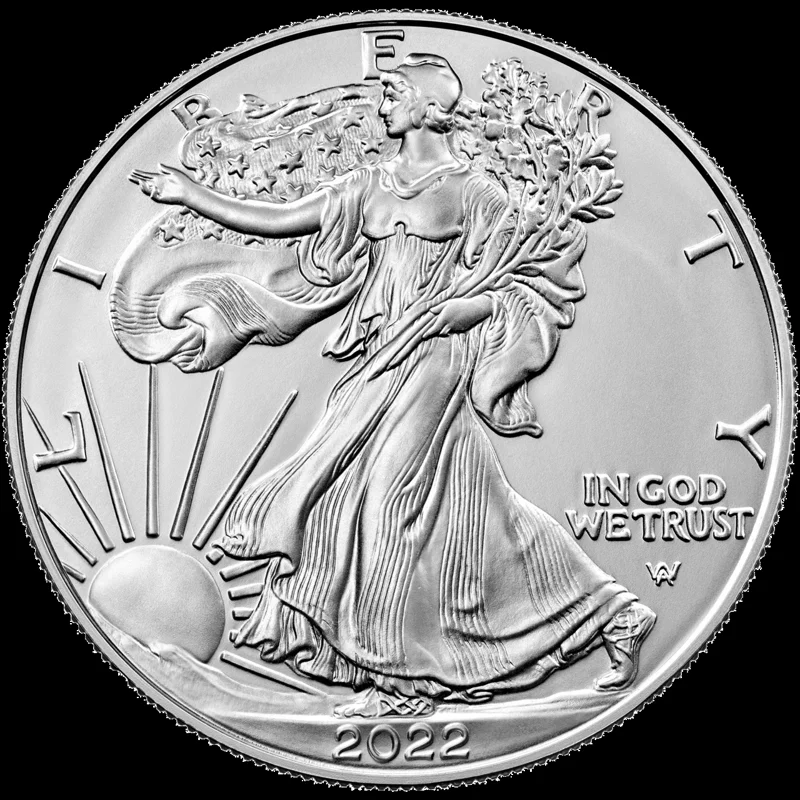
The gold-silver ratio is the number of ounces of silver one ounce of gold buys. With gold near USD 4,000 and silver near USD 54 per ounce in late October 2026, it sits around 74 (Gold and Silver Saver).
Over the 20th century the ratio averaged about 47, and in this century it has mostly ranged from 50 to 80. It peaked above 127 in March 2020 and fell to about 32.6 in 2011 (Investopedia). In January 2026 it dropped as low as 45, just before silver set its London record (MintedMetal).
- Ratio high (above about 80): silver is cheap relative to gold. Tilt new purchases toward silver, or swap some gold for silver.
- Ratio low (below about 50): gold is cheap relative to silver. Tilt toward gold, or swap silver back into gold.
- In between, as now: buy both.
Swapping at the extremes can grow the number of ounces you own without adding money. Silver is far more volatile: it fell further from its January 2026 record than gold did from its high. Many investors therefore hold mostly gold, with silver as a smaller, opportunistic part. Silver is also bulkier: at a ratio of 74, the same value in silver weighs 74 times as much.
Disclaimer: the gold-silver ratio is a rule of thumb, not a forecast. It can stay high or low for years. Past patterns do not guarantee future results; this is not investment advice.
Coins or bars?
- Bars have the lowest premium over spot price and suit the bulk held in a vault. Buy bars from refiners on the London Bullion Market Association (LBMA) Good Delivery list.
- Well-known bullion coins such as the Maple Leaf, Krugerrand, Philharmonic or American Eagle cost a little more but are recognized everywhere and easy to sell.
- Small units for home: 1 oz silver coins and 1/10 oz gold coins are easy to trade in an emergency; see our list of emergency items that hold their value.
More on preparing for hard times: the diesel shortage scenario and our 12 rules for a life you can move.
Important: nothing in this article is financial, investment, tax or legal advice. Gold and silver prices can fall sharply, as silver did after its January 2026 record. Storage abroad may have to be reported to tax authorities in your home country. Do your own research and consult licensed professionals before acting.
Frequently asked questions
What is the safest way of storing gold and silver?
Physical metal, allocated and in your own name, held mostly in an insured, independently audited, non-bank vault in a stable jurisdiction such as Singapore or Switzerland, with only a small, discreetly hidden share at home.
Why avoid paper gold and silver?
ETFs, unallocated accounts, certificates and futures give you a claim on metal, not the metal. In a crisis that claim depends on banks, funds and exchanges keeping their promises, and may be settled in cash or frozen.
Is a bank safe deposit box safe for gold?
It is a poor choice for crisis metal. The contents are not covered by deposit insurance, and when banks close, as in Greece for three weeks in 2015, you cannot reach them.
What is a Zollfreilager?
A Swiss duty-free warehouse under customs control. Metal imported directly into it is not yet taxed, so silver, platinum and palladium can be stored there without the 8.1% Swiss VAT. VAT is charged only if you take the metal out.
How do I use the gold-silver ratio?
When the ratio is high, above about 80, silver is cheap relative to gold, so favor silver. When it is low, below about 50, favor gold. In between, buy both.
Is it a good idea to bury gold in the backyard?
Only for a small reserve on land you own, in a sealed, dry container, deep enough to escape casual digging and detectors, with the location recorded for your heirs. It complements a vault; it does not replace one.
Can I earn interest on stored gold or lend against it?
Some vaults run secured P2P lending. At Silver Bullion in Singapore, clients lend cash to other clients who pledge vaulted metal worth 160% to 200% of the loan, at market rates of about 6% to 7.5% a year in USD. It is low risk but not risk free, and not deposit-insured.
How much of my portfolio should be in gold and silver?
There is no single answer. Morgan Stanley’s CIO proposed 20% gold in a 60/20/20 portfolio in 2025, while J.P. Morgan Private Bank suggests about 5%. Ask a licensed financial adviser; this is not financial advice.
How do I sell metal stored in a private vault?
Most providers buy it back online at a published price, usually slightly below spot, and pay the money to your linked bank account within a few business days.
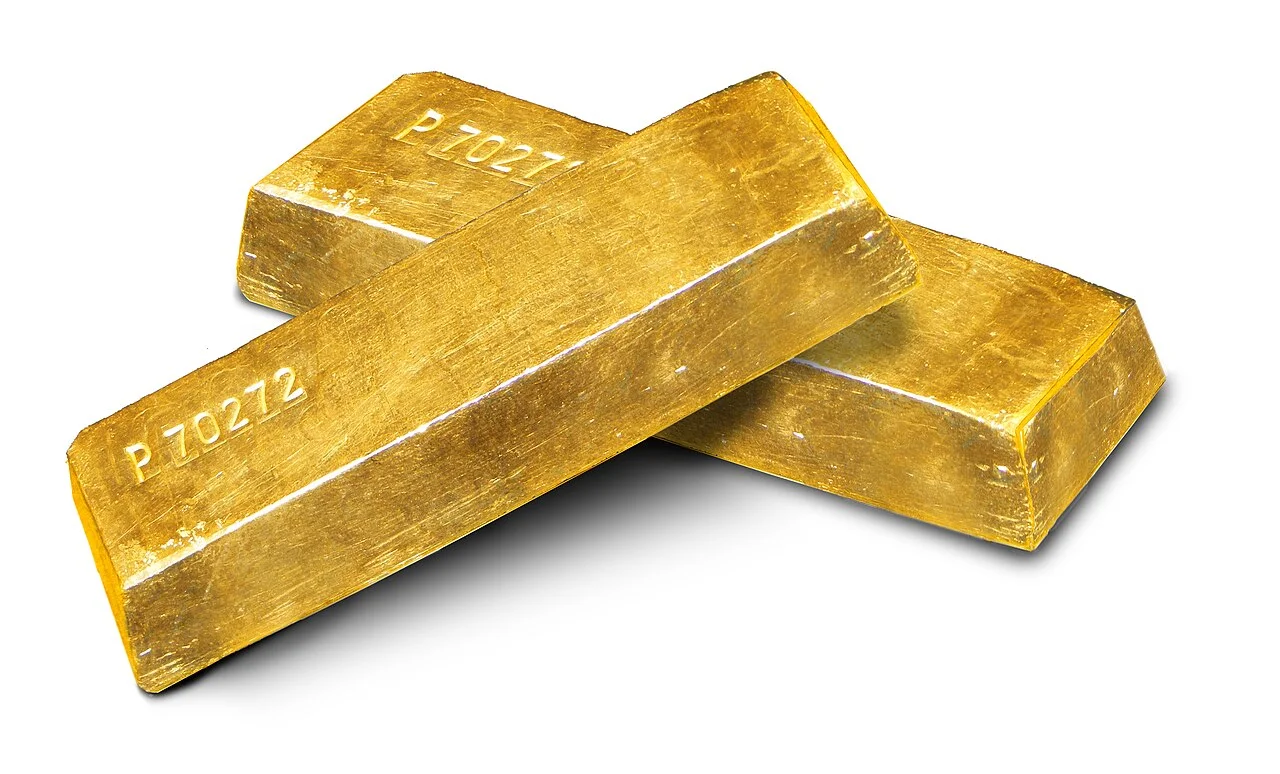
Featured photo: Szaaman, Wikimedia Commons (public domain).