
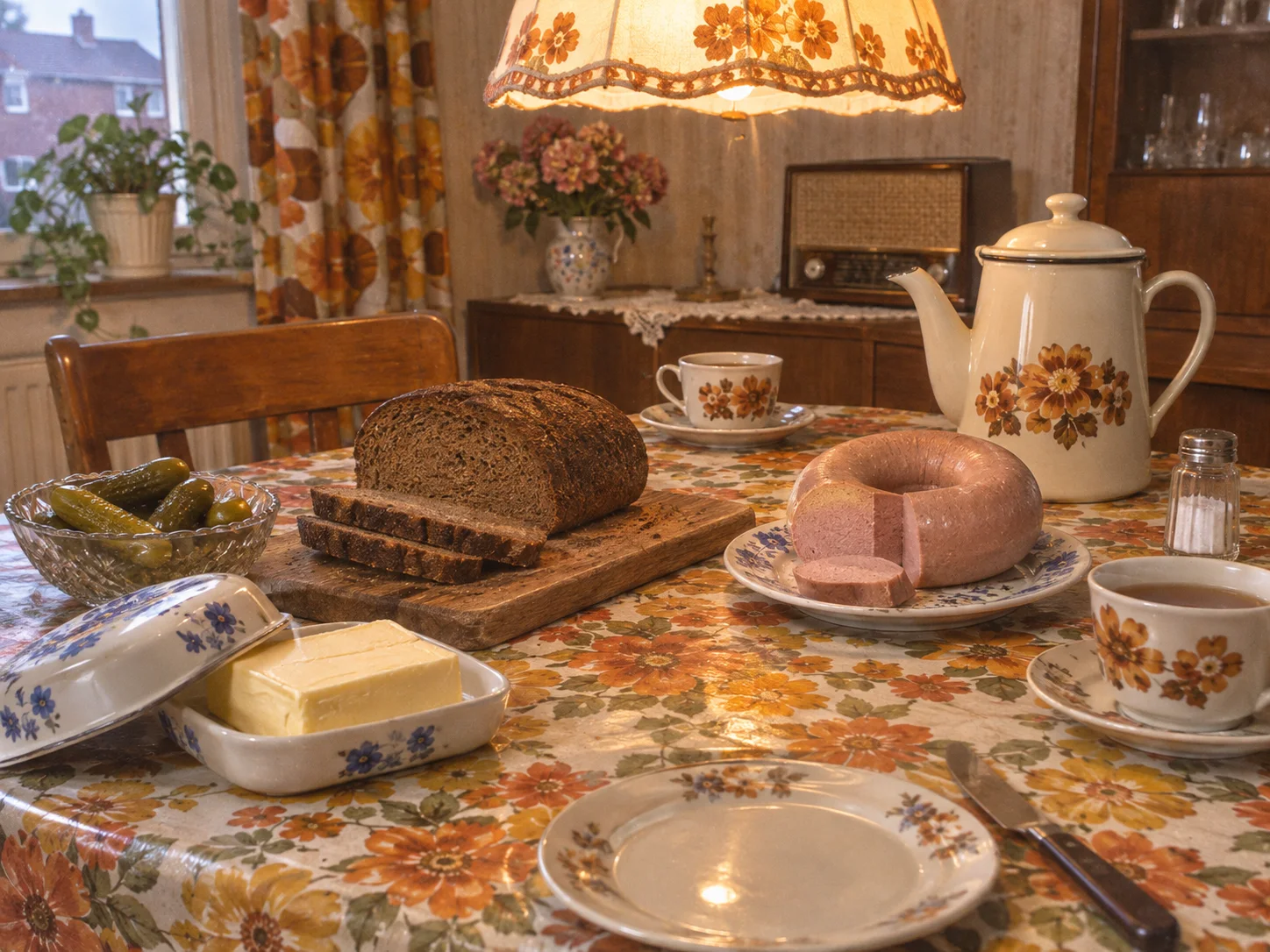
Cheap meals grandma made in hard times were never really about recipes. They were about rules: nothing gets wasted, a little meat flavors a whole pot, and bread and potatoes fill the gaps. I learned the first rule at my German grandmother’s dinner table, and I didn’t learn it gently.
The liverwurst lesson
My father was German. In 1976, when I was about nine, we went to see my grandmother in her small town near Göttingen, in Lower Saxony. At dinner there was bread, and liverwurst on the table. My older brother, about twelve and always hungry, cut himself a thick slab. Before it reached his plate, Oma had smacked him. In wartime, she told him, a piece that size was the meat ration for two people for a whole week.
The war had been over for thirty years, but not for her. Nobody at that table forgot it. To us it was a sausage. To her it was a week of meat for two people, and she had lived that week.
Quick answer
The cheapest filling meals are the ones German grandmothers relied on after the war: dried peas, lentils and beans, potatoes, cabbage and kale, eggs, flour and milk, with a little smoked bacon or sausage for flavor. Cooked at home in the US today, most of them cost between USD 0.70 and USD 2.90 a serving.
Oma wasn’t exaggerating
Germany’s weekly civilian meat ration fell from about 700 grams in 1939 to 250 grams by 1945, according to John D Clare’s history notes. Two people’s weekly ration was about 500 grams, roughly a pound. A thick slab of liverwurst is in that range.
It got worse after the war. In 1948, the meat ration in the British and US zones, which included northern Germany, was 100 grams per month for most people, as reported in the UK Parliament’s Hansard record. A family kitchen had to turn that into meals for weeks.
Why this matters again
Nobody is rationing meat in the US. But the price of nearly everything is climbing. US consumer prices rose 3.7% in the 12 months to September 2026, food rose 2.5%, energy jumped 20.4% and gasoline 34.2%, according to the Bureau of Labor Statistics. When the fuel to get to the store and the power to cook cost more, every meal you stretch counts.
That is why Future West is working with our partner recipe site, Excelitehost, on a series of hard-times German dishes. Cost of living is going up everywhere, and this is our contribution: recipes that cost little, feed a lot and use ingredients any US supermarket sells.
Nine cheap meals grandma made
Costs below are rough per-serving estimates based on US average retail prices from the Bureau of Labor Statistics for October 2026. Your store will vary.
- German potato soup (Kartoffelsuppe): potatoes, leek, carrots, a little bacon and marjoram, thickened by mashing some potatoes in the pot. About USD 1.40.
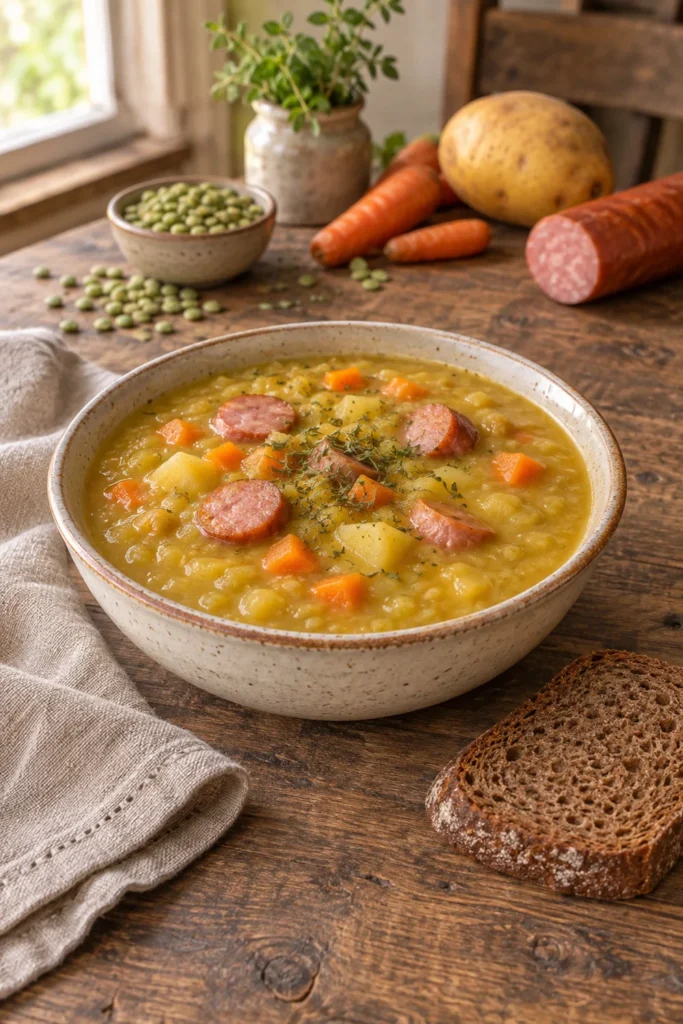
- German split pea soup (Erbsensuppe): yellow peas and a smoked ham hock, cooked until thick. About USD 1.50.
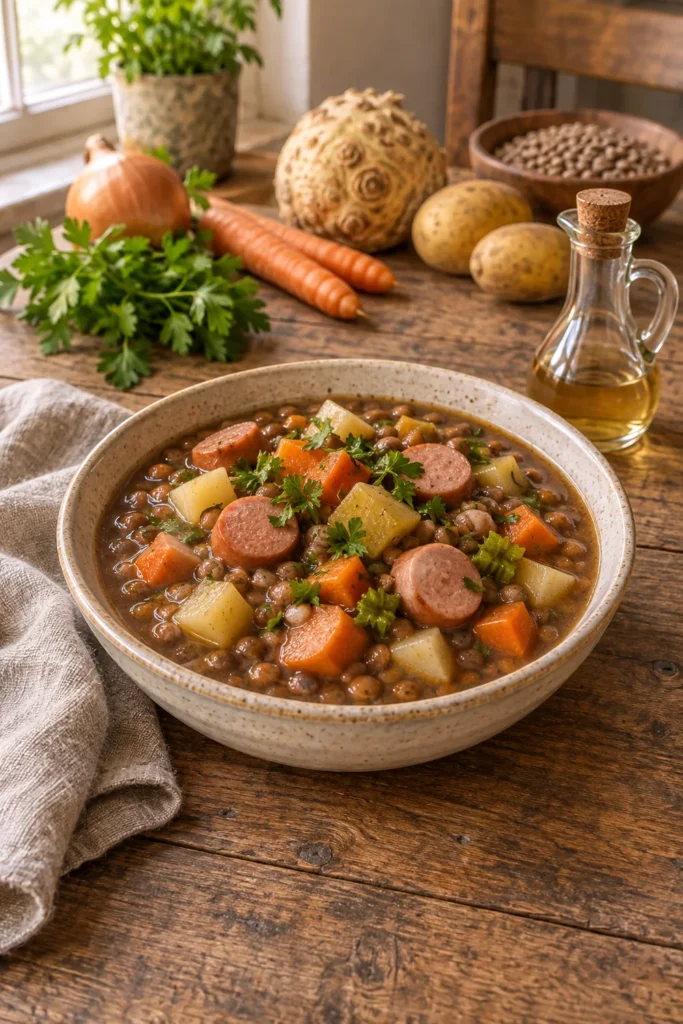
- German lentil stew (Linseneintopf): lentils, root vegetables and a few sliced sausages, finished with vinegar. About USD 1.50.
- German white bean stew (Bohneneintopf): navy beans, a ham hock and savory. The cheapest in the series at about USD 1.20.
- Himmel und Erde: mashed potatoes and apples with fried onions and bacon. About USD 1.40, or USD 2.40 with sausage.
- Eggs in mustard sauce (Senfeier): hard-boiled eggs in a creamy mustard sauce over potatoes. About USD 1.25.
- Dampfnudeln: steamed yeast buns with vanilla sauce, a sweet main dish. About USD 0.70 each.
- German kale with sausage (Grünkohl): the north German winter classic, kale braised with oats and smoked sausage. About USD 2.50.
- Königsberger Klopse: meatballs stretched with stale bread, in a caper sauce made from the poaching broth. About USD 2.90.
Get all nine recipes with printable recipe cards in German Grandma’s Hard-Times Kitchen on Excelitehost.
Grandma’s rules for living on less
You don’t need wartime to use wartime habits. These are the rules behind every dish on that list:
- Let meat be the seasoning. A ham hock or four ounces of bacon flavors a pot that feeds six.
- Buy dry. A pound of dried peas, lentils or beans costs less than USD 2 and keeps for a year.
- Stretch with bread and grains. Stale rolls go into meatballs, oats thicken kale.
- Cook once, eat twice. Soups and stews taste better on day two and freeze well.
- Respect the portion. My grandmother’s slap was about exactly this: food is not something to waste.
How to cook cheap meals grandma made on a modern budget
Most cheap meals grandma made come down to one shopping list. Keep it stocked and you can put a hot, filling dinner on the table for a family for less than the price of one fast-food meal.
- Dry goods: split peas, lentils, navy beans, rolled oats, flour and yeast.
- Cellar vegetables: potatoes, onions, carrots, cabbage and apples, which keep for weeks.
- Cold storage: eggs, milk, butter, a smoked ham hock and a pack of smoked sausage.
- Flavor: mustard, vinegar, bay leaves, marjoram and caraway.
Plan the week around one big pot. Cook a soup or stew on Sunday, eat it twice, and freeze the rest in portions. Midweek, use the leftover potatoes for Himmel und Erde or eggs in mustard sauce. On Friday, do what many German families did and serve something sweet as the main meal, like Dampfnudeln.
The same thinking runs through the rest of Future West. Food is one of the few household costs you control day to day, and every dollar saved there is a dollar for savings, debt or a move. If you want to go further, read our first-year plan to grow food on a budget, and why it pays to stop keeping up with the Joneses. If you are weighing a move, compare prices in our cost of living abroad guide.

None of this is nostalgia. My grandmother didn’t cook this way because it was charming. She cooked this way because she had no choice, and the habits stayed long after the shortages ended. The cheap meals grandma made still work for the same reason they worked then: they turn a few dollars of dry goods and vegetables into food that fills you up.
Cheap meals grandma made: FAQ
What are the cheapest meals to make at home?
Like the cheap meals grandma made, soups and stews built on dried legumes and potatoes. In this series, white bean stew and lentil stew cost about USD 1.20 to 1.50 a serving.
Do these old German recipes work with US ingredients?
Yes. Where German items are hard to find, the recipes use common swaps, such as kielbasa for German smoked sausage or bratwurst for blood sausage.
Why do German hard-times dishes use so little meat?
Meat was rationed during and after World War II. Cooks used small amounts of smoked pork for flavor and filled the pot with legumes, potatoes and vegetables.