
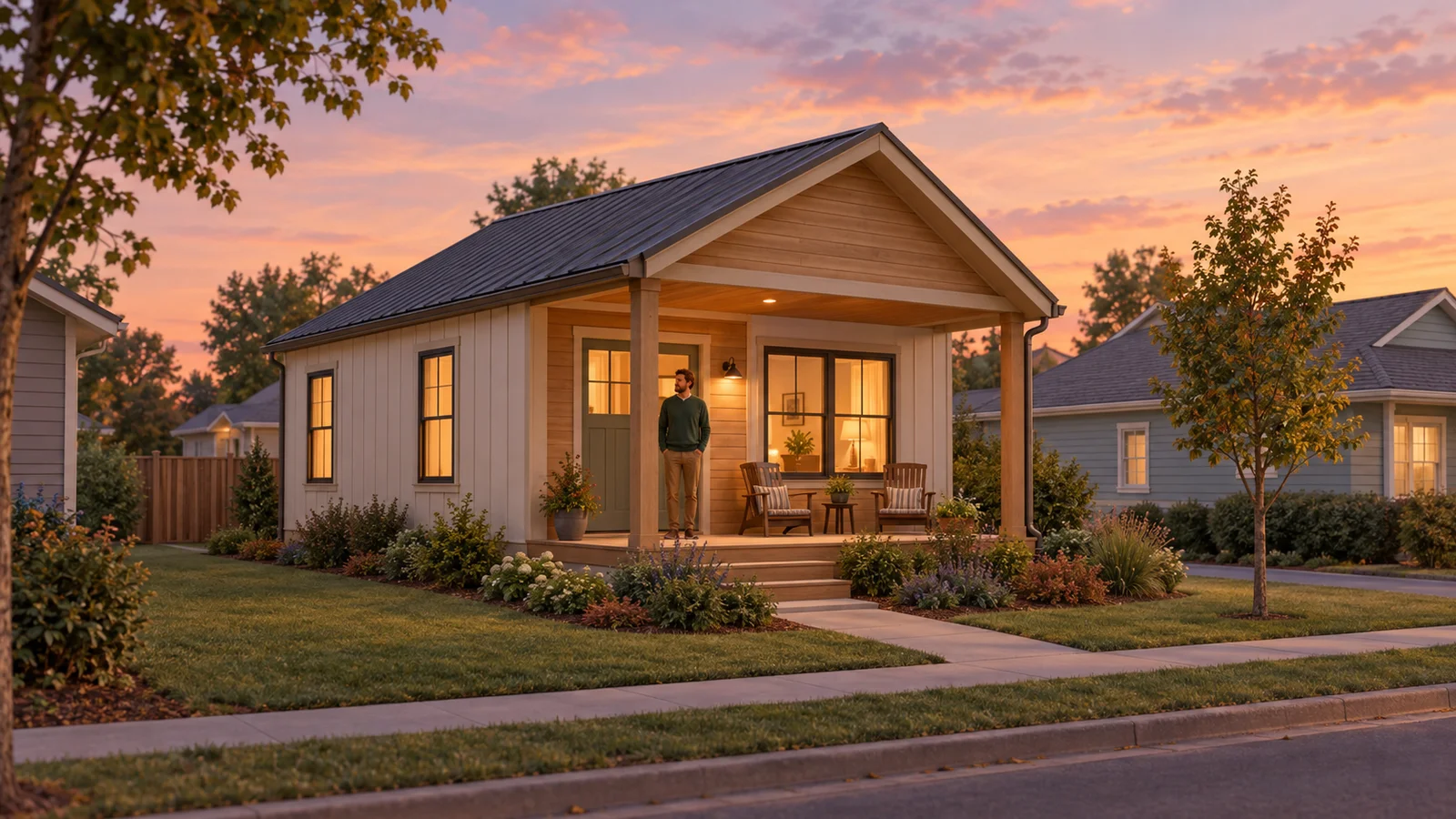
Small cabins promise more than a smaller housing bill: a porch, a garden and space to make life your own. But would leaving a Seattle apartment for a comfortable town cabin actually improve a working professional’s life?
This hypothetical case follows a single Seattle renter earning USD 130,000 gross annually who considers Oologah, Oklahoma. The brief is comfort, not compromise: a ground-floor bedroom, proper kitchen, reliable internet and permanent workspace, not a sleeping loft in the woods.
Quick answer: Our illustrative 480-square-foot cabin project costs USD 300,000 including land, site work and a storm-shelter allowance. With assumed financing, the modeled monthly budget is about USD 3,739 versus USD 4,360 for the Seattle renter, a difference of roughly USD 622 before changes in income taxes, healthcare or travel.
This is a planning exercise, not a real person’s story, a construction quote or an approved building site. Illustrations show invented design concepts, not a completed property.
In this case study
Who this move is for
The buyer has project savings and employer approval to work permanently from Oklahoma without a pay cut. They want a smaller home, not a smaller standard of living, and would trade some city convenience for ownership and outdoor space.
Frequent office visits or an uncertain job would weaken the case. Confirm that income, benefits and working arrangements survive the move before comparing kitchens and porches.
Why Oklahoma, and why a town rather than the woods?
Oklahoma ranked lowest in MERIC’s second-quarter 2026 state cost-of-living comparison, with an index of 83.0 against a US benchmark of 100. The figures average participating cities and metropolitan areas, so they do not prove that every Oklahoma town or parcel is cheap. (MERIC cost-of-living data)
We selected Oologah from the towns named in Sustainably Offgrid’s Oklahoma living guide. The state tourism site places its historical museum about 30 miles north of Tulsa on Highway 169, making it a useful candidate for someone who wants town life without a completely isolated setting. (TravelOK location information)
Tulsa International Airport is roughly a 30-minute drive from the Oologah area, depending on the property and traffic; a local school travel guide estimates 25–30 minutes via Highway 169. (Oologah airport-access guide) That makes occasional business trips and visits to family a practical consideration, without treating the estimate as a guaranteed journey time.
Nearby Oologah Lake offers boating, fishing, sailing, swimming, hiking and picnic areas. (U.S. Army Corps of Engineers recreation guide) Picture an evening walk or weekend on the water as part of the lifestyle, not just a holiday treat; check current access, seasonal closures and conditions before heading out.
The target is a residential lot with neighbors, road access and preferably municipal water and sewer. This is small-town living, not remote acreage or an off-grid experiment.
Oologah-based Atlas Broadband offers fiber-optic and fixed-wireless services. (Atlas Broadband) Confirm availability at the exact address and test it before relying on it for work.
Is Oologah a safe choice?
Oologah appears on Sustainably Offgrid’s safety shortlist, but the guide does not establish a current, independently verified safest-town ranking. (Oklahoma guide) Treat it as a candidate, not a safety guarantee.
AreaVibes reports two violent crimes and 13 property crimes in 2024; its table includes estimate labels, and the figures are historical. (AreaVibes crime data) The official OSBI report uses broader offense categories, so its totals are not directly comparable. (OSBI 2024 report, Table 55)
Ask local police about recent incidents near the parcel, visit by day and evening, and check flood exposure and emergency access. For storm protection, FEMA recommends involving a licensed design professional in safe-room planning. (FEMA guidance)
Buy permission to build, not just inexpensive land
A historical comparable gives a useful land-price anchor: a Price Avenue property in Oologah sold for USD 40,000 on 2 February 2026, with roughly 0.69 acres across two town lots. The listing says both “No Utilities” and “Sewer Available,” with rural water noted, so it does not establish a fully connected building site. (Oologah sold-lot record)
That sold property is a benchmark, not an available recommendation. A separate USD 30,000 South Pine Street listing reported no utilities or available water and sewer: cheap land may mean expensive connections. (South Pine Street listing)
We allow USD 40,000 for another suitable lot, but no parcel has been confirmed to permit this 480-square-foot home. Before committing, obtain written confirmation of the floor area, construction type, foundation, permanent occupancy, setbacks and design.
Oologah directs building-permit and inspection enquiries to Rogers County Planning Commission, at 918-923-4874. (Town permit contacts) Use the posted zoning ordinance, our land due-diligence guide and Sustainably Offgrid’s land-buying checklist to prepare your questions.
Small cabins that work for a professional
The concept is a 20-by-24-foot gross footprint, or 480 square feet, plus a covered porch. A designer still needs to resolve walls, circulation, escape routes and clearances; this is not a construction plan.
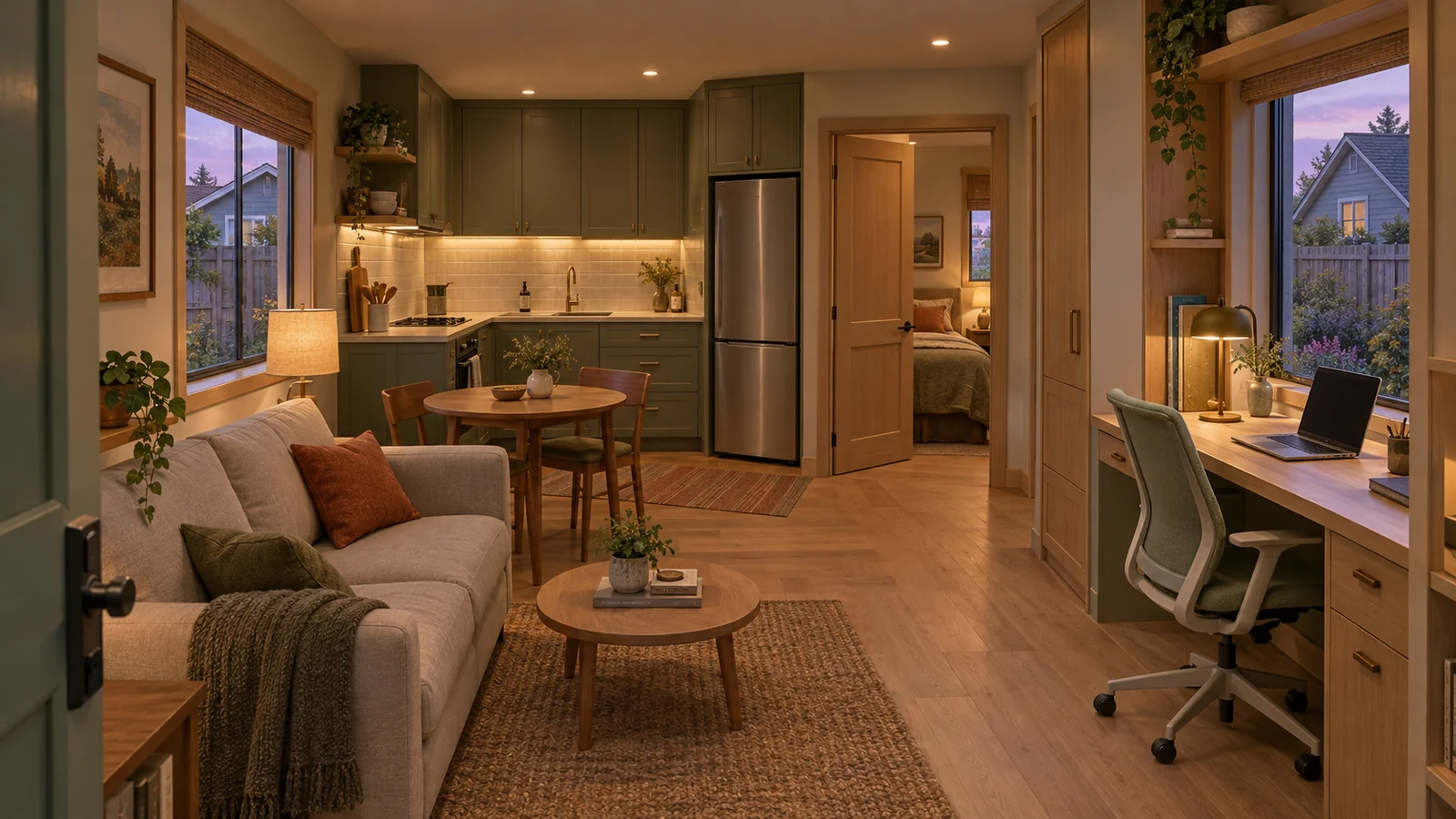
- Ground-floor bedroom: A proper bed and closing door, separate from work.
- Permanent workspace: A desk, comfortable chair and good lighting, without taking over the dining table.
- Real kitchen: Useful counters, appliances and pantry storage for everyday cooking.
- Bathroom and laundry: A comfortable shower and laundry provision designed in from the start.
- Porch and storage: Sheltered outdoor seating and everyday storage; the porch is not conditioned interior space.
The appeal of small cabins is not simply their size. Good daylight, comfortable temperatures, quiet equipment and durable finishes are worth prioritizing over complicated transformable furniture.
Three designs worth comparing
Use these as design and price references, not ready-to-buy solutions for the selected town. A kit price, finished house price and completed project price answer different questions.
| Reference | Manufacturer’s stated figures | What to check |
|---|---|---|
| Mighty Small Homes Cottage 480 | 480 sq ft; USD 37,000 base kit; USD 148,000–185,000 builder estimate. | The same page gives 16 × 24 ft exterior dimensions, which multiply to 384 sq ft. Obtain a corrected drawing and explanation before specifying this product. |
| Mighty Small Homes Modern 600 | 600 sq ft; one bedroom; USD 48,144 base kit; USD 192,576–240,720 builder estimate. | A useful larger reference if a separate work area needs more space. Confirm foundation, delivery, local engineering and finish scope. |
| Wheelhaus Wedge | 400 sq ft; USD 175,000 base price; the page identifies a park-model RV and also mentions modular design. | Attractive design inspiration, not proof of residential approval. Obtain documentation for the exact configuration and intended permanent use. |
The Cottage and Modern pages identify foundation exclusions in their kit descriptions and do not fully reconcile the scope of their builder estimates. Do not use the smallest advertised number as the full cost of a legal, connected home. (Cottage details; Modern details)
A small home can still be a dream home
A front door that is yours. Morning coffee beside a sunlit window, a garden to tend and a place to welcome friends. The dream is not necessarily more square footage; it is a home that feels like your own.
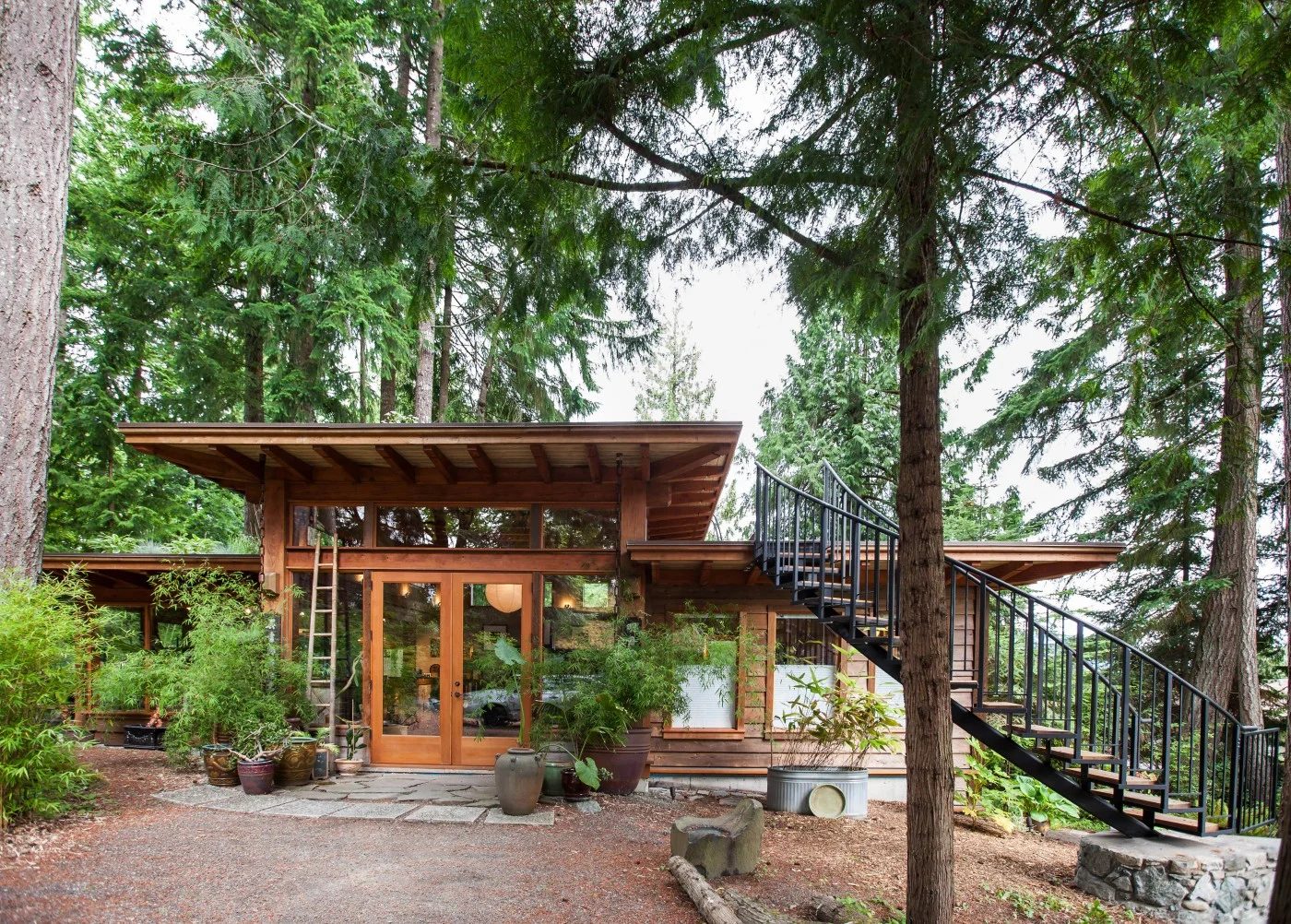
Bring that feeling to the town-lot brief through daylight, a comfortable porch and space for the things you love. For another take on compact indoor-outdoor living, explore Sustainably Offgrid’s Alpha Tiny House feature; neither design is a current local building quote.
Beyond the money: the lifestyle trade-offs
Imagine closing the laptop and spending half an hour in the garden instead of reaching for another screen. That is the appeal to test: a more grounded working week, not a promise that small cabins make life simpler.
The potential benefits
- Time to decompress: Nature exposure is linked with lower stress and better mood, including in urban parks. (American Psychological Association) Build an outdoor routine, but do not expect relocation to cure burnout.
- Back to roots, with comfort: Grow herbs, cook from scratch and learn basic repairs. Choose satisfying hands-on activities, not a second job producing everything yourself.
- A simpler routine: Give space to what matters: good sleep, a proper desk and outdoor seating. A compact home need not mean compulsory minimalism.
- Local connections: Join a club, volunteer or become a regular somewhere. Build community deliberately rather than expecting it to arrive with the keys.
Room for a cat or dog, and everyday companionship
For someone living alone, a cat beside the desk or a dog to walk after work could be a meaningful part of the move. If your rental makes pet ownership difficult, consider the appeal of planning your own home around an animal companion: a secure yard for a dog, or indoor space and an enclosed catio for a cat.
Check local and HOA pet and fencing rules, and choose an animal whose needs fit the home and your routine. Plan daily care, veterinary access and a sitter for work trips; a yard is not a substitute for attention. Pet care and fencing need a separate budget, and companionship should complement, not replace, human connections.
Your own land, with room for hobbies later
Owning a suitable lot could let you add a shed or workshop later. Think secure storage for a motorcycle, bicycles, kayaks and camping gear, or a workbench where projects can stay out without taking over the kitchen.
Reserve space and access on the site plan now. Before buying, check accessory-building permissions, setbacks, lot coverage, easements, deed or HOA restrictions, and noise or vehicle-storage rules.
Sustainably Offgrid’s building-permit guide helps frame the questions. Confirm the exact use and electrical work locally; a storage shed is not automatically approved as a guest room or rental.
The benefit is flexibility: keep the house compact and add hobby space when ready. The future building, foundation, power and equipment need a separate budget.
A garden you can grow into
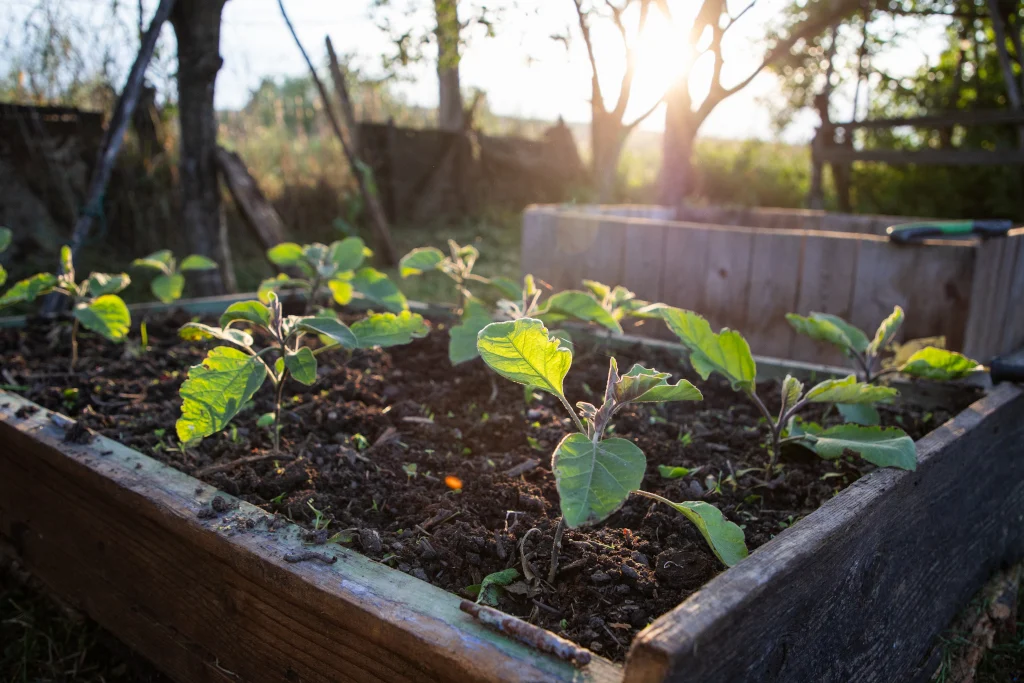
Start with herbs near the kitchen and one or two vegetable beds. Add suitable fruit plants, composting or a potting shed later if space, rules and interest allow.
The reward could be an absorbing hobby and ingredients picked for dinner, not food self-sufficiency. Plan for watering during work trips and seasonal upkeep as well as the harvest.
- Plan your first season: Start with Future West’s Grow Food on a Budget.
- Prepare the beds: Check sunlight, drainage and water access, then explore Sustainably Offgrid’s raised-bed soil guide.
- Learn the upkeep: Read Sustainably Offgrid’s newspaper mulch guide, and leave room for paths and tool storage.
Beds, soil, tools, irrigation and garden structures need their own allowance. The model assumes no grocery savings from gardening.
The disadvantages you should not romanticize
- Loneliness: Where will conversation, friendship and dating fit into a remote-working week? Occasional city trips may not replace the people you leave behind.
- Less spontaneity: Test access to restaurants, live music, the gym and airport. Decide whether planning more drives feels peaceful or restrictive.
- Healthcare access: CDC identifies fewer providers and longer travel distances as rural barriers nationally, not specifically at this address. (CDC rural health guidance) Check your insurance network and access to urgent and specialist care.
- Upkeep: Repairs, yard work and arranging tradespeople take time. Decide what to learn and what to outsource.
- Limited space: Picture bad weather, a houseguest and a work deadline in the same week. Protect privacy, storage and a boundary between work and home.
Resilience takes more than a rural ZIP code
Keep the convenience of a connected town home, then plan for interruptions. Prioritize power and internet outages, illness while living alone, transport problems and severe weather.
- Work backups: Test an alternative connection and workspace; obtain professional advice on backup power if needed.
- Household readiness: Arrange supplies and medications, learn basic maintenance and build a network of people who can help.
- Fallback plans: Consider a vehicle failure, equipment repairs and access to the storm shelter.
Extra backup equipment needs separate costing. The goal is practical skills and support, not the assumption that a cabin and garden make you independent.
What these small cabins cost with land included
The following USD 300,000 project is our editorial allowance for a comfortable 480-square-foot home, not a contractor bid. It assumes a straightforward lot and ordinary connections; difficult ground, major utility extensions or a complicated wastewater solution would require a different budget.
| Project item | Assumed cost, USD |
|---|---|
| Land | 40,000 |
| Completed house work, excluding separately budgeted site/foundation scope | 165,000 |
| Foundation, site preparation, delivery and utility connections | 30,000 |
| Design, survey, permits and closing allowance | 10,000 |
| Porch, basic landscaping and furnishings | 10,000 |
| Construction contingency | 25,000 |
| Moving, overlapping housing and financing-cost allowance | 10,000 |
| Professionally designed storm shelter / safe-room allowance, subject to quote and siting | 10,000 |
| Total modeled project | 300,000 |
Have the builder reconcile every line before relying on the total. Foundations, delivery and installation must not be omitted, or counted in both the house quote and the site budget.
The financing illustration assumes 20% equity, a USD 240,000 loan, a 30-year term and a 6.75% fixed annual rate. That produces principal and interest of about USD 1,557 monthly; the rate is an assumption, not a market quote or a promise that every project expense can be financed.
The modeled equity contribution is USD 60,000, but the actual cash requirement could be higher. Costs a lender will not finance, construction payment timing and a personal emergency fund all need separate provision; the USD 10,000 shelter allowance is our placeholder, not a FEMA price estimate or an installer quote.
Seattle rent versus a town cabin: the monthly budget
Numbeo supplies the Seattle rent and selected everyday prices, with Tulsa used as an explicit proxy for Oologah, not town-specific data. Seattle’s page reported an update on 28 October 2026 and 147 contributors; Tulsa’s reported 27 October 2026 and 26 contributors over the preceding 12 months, so the destination sample is much smaller. (Seattle prices; Tulsa prices)
We build the budget from individual items rather than adding housing and transport to Numbeo’s already aggregated single-person estimate. Dining means ten inexpensive restaurant meals monthly, and coffee means twelve purchased cappuccinos; the other allowances are identified below.
| Monthly expense, USD | Seattle renter | Oklahoma cabin |
|---|---|---|
| Rent / modeled mortgage principal and interest | 2,469.71 | 1,556.64 |
| Property-tax reserve | Included in rent | 150 |
| Renters / homeowners insurance | 25 | 200 |
| Maintenance reserve | 0 | 150 |
| Utilities | 304.79 | 160 |
| Groceries | 450 | 375 |
| Ten restaurant meals | 250 | 160 |
| Twelve coffees | 79.68 | 60 |
| Gym | 76.46 | 44 |
| Mobile | 68.44 | 69.29 |
| Broadband | 86.31 | 63.75 |
| Personal spending | 300 | 300 |
| Transport, including vehicle-replacement allowance | 250 | 450 |
| Total, rounded | 4,360 | 3,739 |
Seattle rent is Numbeo’s city-center one-bedroom figure, and its utility figure is for an 85-square-meter apartment; restaurant, coffee, gym, mobile and broadband inputs also come from the respective city pages. All groceries, personal spending, transport, ownership reserves and cabin utilities are our assumptions, not Numbeo observations or local quotes. (Seattle source figures; Tulsa source figures)
The result is a modeled saving of about USD 622 a month, or USD 7,461 a year, calculated before rounding. The cabin budget is approximately 86% of the benchmark city budget, but it excludes income taxes, health insurance and medical costs, retirement contributions, other debts, major travel and emergency saving.
If the actual Seattle apartment costs USD 3,000 rather than the source average, the modeled saving rises to roughly USD 1,152 monthly. That higher rent is a separate scenario, not an assertion about what this fictional professional currently pays.
When the savings disappear
Small cabins do not make an income portable. A loss of USD 622 in monthly take-home pay would erase the base saving, while USD 500 of additional monthly taxes, healthcare costs or trips back to the office would leave only about USD 122.
- Higher borrowing cost: At an assumed 8.5% instead of 6.75%, the cabin budget rises to about USD 4,027 monthly. The home is still smaller, but financing absorbs more of the benefit.
- Construction overrun: A 20% increase in total project cost, financed in the same proportions and on the same terms, adds about USD 311 monthly. Contingency is not a guarantee against overruns.
- Insurance and property taxes: The table uses reserves, not quotes or assessments. Obtain parcel-specific figures and review exclusions and deductibles before relying on the monthly total.
- More driving: The model already raises transport from USD 250 to USD 450 monthly. Test your actual routine instead of assuming remote work means no car costs.
A cash buyer avoids the modeled mortgage payment and has an ongoing budget around USD 2,182 monthly. But they have committed USD 300,000; adding an illustrative 3% annual opportunity cost raises the analytical monthly figure to about USD 2,932, without predicting investment returns.
This is a cash-flow comparison with reserves, not a full investment analysis. Mortgage principal builds equity, and resale value, selling costs and the financed buyer’s down-payment opportunity cost are not included in the headline savings.
Try the life before commissioning the house
Spend an ordinary working week in town before buying. Test calls, groceries and evening routines, then note time outdoors, driving, social contact and the city conveniences you miss.
Ask yourself: would I still choose this life if the saving disappeared? If not, try a longer rental stay before committing.
Compare a local rental, an existing small house and a custom cabin. Small cabins make sense here only when the work, permissions, budget and lifestyle fit; our guide to inexpensive states for land can help explore alternatives.
Small cabins: common questions
Can small cabins be used as year-round homes?
Only if the exact building and parcel are approved for permanent residential occupancy. Do not assume that a cabin kit, park-model RV or small floor area is automatically accepted; confirm zoning, construction, utilities and occupancy with the local authority.
Is this a tiny house or a small cabin?
This case proposes a 480-square-foot permanent small cabin. Marketing terms vary, and the label does not establish the local legal classification or permit pathway.
Does the USD 300,000 include land?
Yes. The illustrative budget includes USD 40,000 for land, house work, site and foundation allowances, permits, a porch, contingency, moving costs and a USD 10,000 storm-shelter allowance. It is an editorial model rather than a contractor quote.
How much could the move save each month?
The base Oologah model, using Tulsa everyday prices as a proxy, saves about USD 622 monthly compared with the benchmark Seattle renter, before changes to income taxes, healthcare, benefits or major travel. Different financing, building costs or compensation can change or eliminate that saving.
What should a remote worker check before moving?
Confirm employer approval, compensation, payroll and tax handling, healthcare coverage and reliable internet at the exact address. Test a normal working week in the town before committing to a house project.
Is a small-town cabin a better lifestyle even without the savings?
It may suit someone who genuinely wants outdoor routines, hands-on projects and a more deliberate use of space. Balance that against social isolation, driving, healthcare access, maintenance and working in a compact home. Try an ordinary working week locally and ask whether you would still choose the move if the financial saving disappeared.
Research checked 30 October 2026. This hypothetical case is for general information, not personalized financial, legal, tax or building advice. Generated images are conceptual illustrations; obtain local professional advice and current quotes before committing money.